

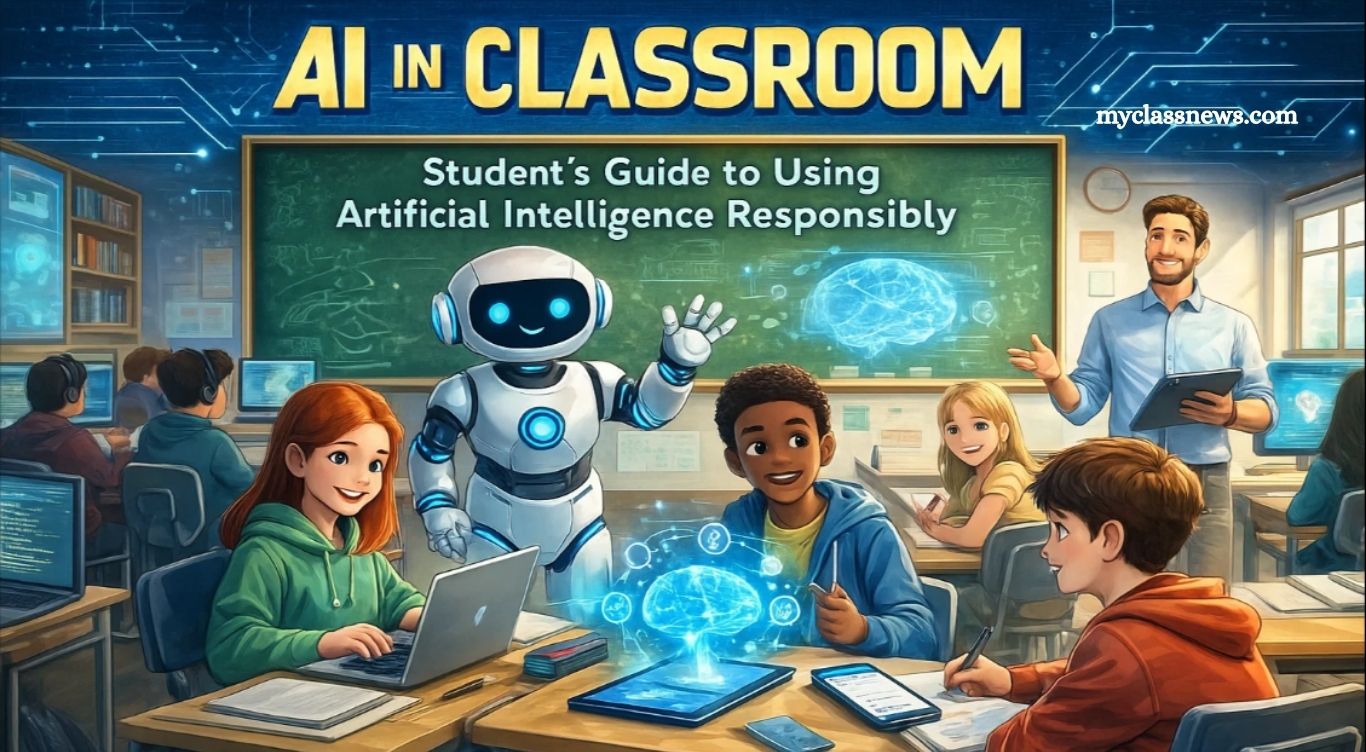
Artificial intelligence is changing the way students learn, complete assignments, research topics, and prepare for exams. From AI-powered writing assistants to smart tutoring platforms, new learning tools offer several ways to improve education. However, students must understand classroom AI rules before using these technologies to avoid academic problems and develop responsible learning habits.
Schools and teachers are creating guidelines to explain when AI tools are acceptable, how students should use them, and which activities require original work. Understanding these rules helps students benefit from modern technology while protecting academic honesty, personal information, and essential learning skills.
Read More: Personalized Learning Gets a Fresh Push Across Schools and Colleges
Understanding Classroom AI Rules
Classroom AI rules are guidelines that explain how students can use artificial intelligence for educational activities. These rules may cover homework, research projects, essays, presentations, online quizzes, and examinations. Each school or teacher may follow different policies depending on the subject, assignment requirements, and learning objectives.
Some teachers allow AI tools for brainstorming, grammar corrections, and concept explanations, while others restrict their use for specific assignments. Students should always review classroom instructions before using an AI platform. Following these guidelines prevents misunderstandings and ensures that technology supports learning rather than replacing independent effort.
Use AI as a Learning Assistant, Not a Shortcut
AI tools can explain difficult concepts, simplify complex topics, generate practice questions, and provide helpful study suggestions. Students can use these features to understand lessons more clearly and prepare for classroom discussions. AI tutoring tools may also help learners identify knowledge gaps and explore different approaches to solving problems.
However, depending entirely on AI-generated answers can weaken critical thinking and problem-solving abilities. Students should attempt assignments independently before seeking assistance from artificial intelligence. Using AI to understand a topic is generally more valuable than copying an answer without knowing how it works.
Always Follow Your Teacher’s AI Policy
Every classroom may have different expectations for AI use. A teacher might permit AI-assisted research but prohibit AI-generated essays or answers during examinations. Another teacher may allow students to use writing assistants while requiring them to explain which parts of their work received technological assistance.
Students should ask questions whenever an assignment’s AI requirements seem unclear. They should confirm whether AI-generated outlines, summaries, translations, images, or edited paragraphs are permitted. Checking the rules before starting an assignment reduces the risk of accidental academic misconduct and helps students complete their work confidently.
Protect Academic Honesty and Original Work
Academic honesty means submitting work that reflects a student’s own understanding, effort, and learning. Although AI can provide useful suggestions, presenting an entirely AI-generated assignment as independent work may violate school policies. Students should avoid copying generated content directly when their teachers expect original writing or individual problem-solving.
A responsible approach involves using AI for support while developing personal ideas and explanations. Students can compare AI suggestions with classroom notes, textbooks, and trusted educational sources. They should also ensure that their final submissions accurately represent their own understanding and follow any disclosure requirements established by their teachers.
Check AI-Generated Information Before Using It
Artificial intelligence does not always provide accurate information. Some tools generate incorrect facts, outdated explanations, misleading statistics, or references that do not exist. These errors can affect research projects, science assignments, historical discussions, and other academic activities.
Students should verify important claims using reliable textbooks, official educational websites, academic publications, and teacher-approved resources. They should check dates, names, calculations, quotations, and source details before including information in an assignment. Developing this habit strengthens research skills and helps students recognize the difference between convincing language and reliable evidence.
Keep Personal Information Private
Many AI learning platforms process information submitted by users. Students should understand that sharing sensitive information online can create privacy risks. Personal details, passwords, home addresses, private conversations, school identification numbers, and confidential family information should never be entered into AI tools without appropriate authorization and safeguards.
Students should also be careful when uploading photographs, school documents, classmates’ work, or recordings of classroom activities. They should use school-approved platforms whenever possible and follow their institution’s privacy requirements. Younger students may need guidance from teachers or parents before creating accounts or sharing educational materials with AI services.
Understand Rules for Homework, Tests, and Exams
AI permissions often depend on the type of academic activity. A teacher may allow students to use AI for revision notes or practice exercises but prohibit it during a graded test. Using an AI chatbot to answer questions during a restricted examination could violate academic integrity rules.
Students should read assignment instructions carefully and identify any limits on technological assistance. If a teacher requires independent work, students should complete the task without unauthorized AI support. When AI is permitted, learners should follow the stated conditions and ask for clarification rather than assuming every tool is acceptable.
Disclose AI Assistance When Required
Some schools and teachers require students to disclose when they use AI during research or assignment preparation. This requirement helps educators understand how students developed their work and whether they used technology appropriately. Disclosure rules may differ according to the institution, subject, and assignment.
Students should follow the requested method for acknowledging AI assistance. This might involve naming the tool, describing how it was used, or identifying AI-assisted sections. They should never invent sources, misrepresent their research process, or claim that AI-generated material was entirely their own work when disclosure is required.
Choose Safe and Reliable AI Learning Tools
Not every AI platform offers the same level of accuracy, privacy, accessibility, or educational value. Students should choose tools that match their learning needs and comply with school policies. Teacher-recommended platforms can provide a useful starting point because educators may already understand their features and limitations.
Before using a new tool, students should review its privacy settings, age requirements, data practices, and available learning features. They should avoid platforms that request unnecessary personal information or make unrealistic promises. Reliable tools should support education, encourage independent thinking, and provide clear information about their capabilities and limitations.
Develop Critical Thinking and Independent Learning Skills
AI can generate explanations quickly, but students still need to evaluate information, compare ideas, and form independent conclusions. These skills remain essential for academic success and future careers. Accepting every AI response without questioning its accuracy can limit intellectual growth and make students less prepared to solve unfamiliar problems.
Students should use AI responses as starting points for further investigation. They can ask follow-up questions, compare multiple explanations, solve problems independently, and discuss confusing topics with teachers or classmates. This balanced approach encourages curiosity while ensuring that students remain active participants in their education.
Frequently Asked Questions
What are classroom AI rules?
Classroom AI rules explain how students can use artificial intelligence responsibly for learning and assignments.
Can students use AI for homework?
Yes, if teachers allow it and students follow assignment guidelines.
Is using AI considered cheating?
AI use may be considered cheating when it violates school policies or replaces required original work.
How can students check AI-generated information?
Students should verify facts using textbooks, trusted websites, and reliable educational sources.
Can AI tools protect student privacy?
Privacy depends on the tool. Students should avoid sharing sensitive personal information.
Should students tell teachers about AI use?
Yes, when classroom policies require students to disclose AI assistance.
What is the best way to use AI for learning?
Use AI to understand difficult topics, practice skills, and explore ideas while completing original work independently.
Conclusion
Classroom AI rules help students use modern learning tools safely, responsibly, and effectively. By following teachers’ instructions, protecting personal information, checking AI-generated facts, and maintaining academic honesty, students can improve their learning experience. Artificial intelligence should support education rather than replace independent thinking and personal effort.
