

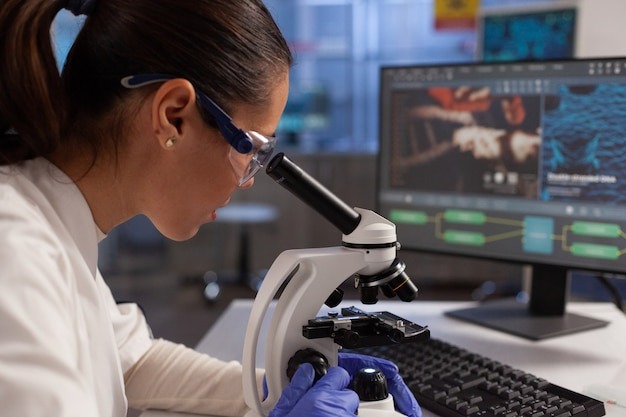
There’s a crucial difference between knowing biology and being able to do biological research. Selection processes at every career stage reward different types of preparation. This distinction matters more than most people realize.
Specialized biological education doesn’t just teach you more facts. It creates compounding competitive advantages by developing experimental design skills, data interpretation abilities, and methodological rigor. These advantages compound through pathways that unlock competitive opportunities at each career stage. It’s about building capabilities, not cramming content.
Beyond Memorization
Biological education produces two completely different outcomes. Content knowledge means memorized information about biological systems, processes, and principles. Research capabilities? That’s designing experiments, interpreting data, synthesizing literature, and executing laboratory techniques. Both matter, but they serve different functions.
Selection processes treat these outcomes differently because research capabilities distinguish candidates when everyone’s memorized the same textbooks. University admissions, research lab hiring, graduate programs, and professional employment increasingly evaluate demonstrated investigation skills alongside test scores. You can’t assess capabilities through multiple-choice questions.
Here’s the thing about content versus capabilities: you can cram biological facts in a few months when you need them. Try developing years of experimental design practice or laboratory technique mastery overnight. Good luck with that.
General science education can’t develop the same research capabilities as intensive specialized training. Limited practice time contrasts with the repeated experience you need for experimental design proficiency, data interpretation sophistication, and technical mastery.
From Laboratory Bench to Career Trajectory
Research skills you develop through intensive biological education don’t just stick around—they actually work across different biological fields and career stages. These aren’t generic research abilities that could apply to any subject. They’re specifically biological thinking patterns and methodological frameworks that stay relevant no matter what particular area you end up working in.
Here’s what this means practically: if you’ve trained intensively in one biological subdiscipline, you can contribute effectively to research in completely different areas. Your lab skills transfer. Your analytical reasoning applies. The methodological sophistication you’ve developed proves valuable across biological contexts.
This opens doors beyond your initial training focus.
Biology presents unique investigative challenges that other sciences don’t face in quite the same way. You’re dealing with variation, multi-scale complexity, and context-dependence that require specific analytical approaches. These challenges are different from what you’d encounter in physics, chemistry, or mathematics research. The skills you develop to handle biological complexity create a transfer architecture that connects to something powerful: capabilities you build at one career stage don’t become obsolete. They remain valuable and applicable as you advance, creating a compounding advantage over time.
Why Early Capability Development Matters
Specialized biological education doesn’t just add advantages. It multiplies them. Each career stage becomes a gateway where your existing capabilities determine which competitive opportunities you can even access next. Early capability development kicks off this trajectory of research experiences, publications, and methodological know-how that sets candidates apart at every selection point down the line.
Picture this: students walk into university already comfortable with lab skills and experimental design. They jump straight into research projects while their peers spend months just learning the basics. This head start translates into publication opportunities, presentation experience, and methodological sophistication that most early-stage undergraduates never see.
Those accumulated undergraduate research experiences? They make graduate program applications stand out when test scores look identical across candidates. Students who enter graduate programs with research capabilities already in place move through degree requirements faster. They finish dissertations quicker and build stronger research portfolios.
The research productivity and investigative sophistication you develop during graduate training create real hiring advantages in professional settings.
This compounding cascade works differently than linear advantages that help you at just one career stage. Early development starts the cascade rolling. Late development only helps you once. Biological investigation demands such specific sophistication that these capabilities transfer remarkably well across different biological contexts.

Unique Methodological Sophistication
Biological investigation needs specific methodological sophistication that’s different from other scientific disciplines. Why? Because biological systems are inherently complex, variable, and context-dependent. This explains why specialized biological training develops unique competencies that are valuable for careers requiring biological research capabilities rather than generic scientific preparation.
Biological phenomena emerge from interactions across organizational levels. Molecular mechanisms influence cellular behavior. Cellular properties determine tissue function. Organ systems interact to produce organismal physiology. Biological investigation requires the ability to integrate information across scales and understand how processes at one level constrain and enable processes at other levels.
Living things are wonderfully, frustratingly unpredictable compared to the tidy world of physics equations.
Biological systems show fundamental variation that’s different from experimental noise in physical systems. You need analytical sophistication to distinguish meaningful biological differences from random variation, design experiments that account for inherent variability, and interpret patterns within variation. These capabilities are specific to biological investigation.
Systematic educational programs that develop these distinctive biological research capabilities prove essential for competitive academic preparation. Rigorous curricula like IB Biology HL show approaches that build these skills through intensive coverage of cellular biology, molecular genetics, ecology, evolution, and human physiology. They combine extensive laboratory investigation and independent research requirements that develop sophisticated analytical reasoning about complex biological phenomena. This specificity in biological methodology translates into professional value in sectors such as biomedical research, environmental science, biotechnology, and pharmaceutical development where the ability to address complex biological challenges is paramount.
Career Stages and Competitive Advantages
Research skills from specialized biology education pay off at key career moments. We’re talking university admissions, undergraduate research spots, graduate programs, and job hunting. Each stage rewards students who can design experiments, interpret data, and handle complex methods.
Labs need undergrads who’ll actually contribute from day one. Competitive programs now look at research experience and lab skills, not just test scores. Students with solid capabilities jump straight into intensive coursework and snag research opportunities immediately. They don’t need months learning basics.
What separates the prepared from the unprepared? The ability to run protocols without constant supervision, analyze results correctly, and fix problems when equipment acts up. Students without these skills simply can’t access the same research positions.
Professional employers think differently too. In biomedical research, environmental science, biotech, and pharma, they want candidates who can actually investigate problems. Not just recite textbook facts.
The ability to design studies and make sense of complex data matters because it solves real problems. This focus on capability over memorized content proves our earlier point: there’s a huge difference between knowing about biological systems and being able to study them effectively.
Building Capability Through Curriculum Design
Educational programs that effectively develop biological research capabilities share structural features distinguishing them from content-focused curricula: extended laboratory investigation time, independent research requirements, systematic coverage of experimental design principles, and repeated practice with data interpretation across multiple biological subdisciplines.
Curriculum design elements enable systematic capability development. Extended laboratory time proves necessary for technique mastery; independent research requirements develop experimental design proficiency; repeated practice across subdisciplines builds transferable analytical reasoning rather than context-specific skills.
Programs emphasizing capability development employ different assessment approaches than content-focused curricula. Demonstrating research capabilities requires actual investigation—designing experiments, collecting data, interpreting results, presenting findings—rather than examinations testing memorized knowledge. Because apparently filling in bubbles on a Scantron sheet doesn’t actually measure whether you can troubleshoot a failed polymerase chain reaction.
Specialization vs. Breadth in Scientific Preparation
Understanding how program design features enable capability development clarifies the strategic choices students and educators face. The compounding advantage mechanism helps with strategic educational decision-making by showing the trade-offs between depth in fewer areas versus breadth across many areas. Specialized biological preparation creates amplifying advantages for students who’re oriented toward biological research careers. Broader preparation maintains flexibility for those uncertain about career direction.
Students and educators face a fundamental resource allocation decision. They’ve got to distribute limited time between developing capabilities in specific domains versus gaining exposure across multiple areas.
This strategic choice has different implications depending on career goals and certainty about future direction.
Intensive biological education proves strategically advantageous despite narrower initial exposure under certain conditions. The compounding mechanism means early capability development produces amplifying benefits across subsequent career stages. Content knowledge can be acquired when needed.
For educators and institutions designing programs aimed at preparing students for biological research careers, prioritizing capability development over content coverage is essential. Programs should structure extended practice opportunities that allow students to build cumulative research sophistication rather than merely surveying biological subdisciplines without depth. This approach ensures that students develop the necessary competencies for success in competitive academic and professional environments.
Alternative Pathways and Access Barriers
Specialized biological education creates clear competitive advantages through specific mechanisms. But here’s the reality: students succeed in biological research through all kinds of educational paths. They don’t need intensive early specialization to make it. Sure, this creates some logical tension. We’re saying systematic analysis works while acknowledging that individual careers are wonderfully unpredictable.
The real problem? Access.
When specialized education programs aren’t evenly distributed, systematic advantages become structural disadvantages. Students at schools without rigorous lab-intensive curricula face an uphill battle in the selection process. It’s not about their potential. It’s about what opportunities they had.
This analysis has gaps. We haven’t looked at quantitative outcome data or compared specific programs. We haven’t explored interdisciplinary career paths or how the biological research landscape keeps evolving. Sometimes breadth beats depth, and we haven’t addressed when that happens. Understanding these mechanisms helps you make better decisions within their applicable contexts. Just know the limits.
Capability Development vs. Content Knowledge
Specialized biological education functions as a capability development system initiating a cascade of competitive advantages because selection processes at successive career stages reward the same underlying competencies. Content knowledge proves necessary but insufficient; research capabilities distinguish candidates when content knowledge is comparable.
The relevant question shifts from ‘how much biology should students learn?’ to ‘which competencies need development, and which educational structures effectively develop those competencies?’ This reframing changes strategic educational planning for students oriented toward biological research careers.
Reflecting on whether the compounding advantage mechanism operates beyond biological education raises questions about whether specialized training in any domain creates similar cascades when early capability development enables opportunities that develop additional capabilities. But here’s what matters for students making educational choices right now: the distinction between accumulating knowledge and developing research capabilities isn’t just academic theory. It’s the difference between memorizing what others discovered and being equipped to make discoveries yourself.