

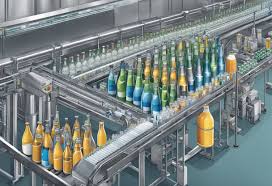
The evaluation criteria for packaging machine performance are its Throughput, Stability, and Waste Reduction. In those industries in which product integrity and tamper evidence are mandates rather than nice-to-haves, the capping station has extraordinary responsibility. Roll-on pilfer-proof is the industry standard closure design for the beverage, pharmaceutical, and food industries, and automating the process is equally essential for manufacturers that compete on quality and volume.
What Is ROPP Capping Technology?
Roll-on pilfer-proof (ROPP) capping is a method of capping where a flat aluminium shell is applied onto a thread (or finish depending on geography) of a bottle neck and is then formed into the desired shape by the use of rolling capping heads. Hardened rollers press the soft aluminium against the threading on the bottle to create a tailor-made, tamper-evident seal that is unique to each container. When the cap is opened, the security band is broken free — creating a clear indication of first-open integrity for consumers and regulators.
ROPP closures have become the most popular choice for products like wine, spirits, olive oil, pharmaceutical syrups and premium waters, because the seal is made on the bottle, it is not pre-made like conventional caps to fit a universal thread size. This yields a tighter, more uniform closure than what you get with screw caps on pre-threaded containers.
How Automation Improves Packaging Efficiency
Operator variability in manual or semi-automatic ROPP capping has a direct bearing on the quality of the seal. Roller pressure, dwell time and spindle speed affect whether a closure is within specification – and process parameters dictated by humans simply aren’t stable enough to be consistent over thousands of units per production shift.
A fully automatic ropp capping machine removes this variation by performing ever closure under servo controlled, programmable parameters. Spindle torque, roller pressure, and cap placement depth are digitally adjusted and remain the same, working with any speed, any shift, and any operator. However, this machine employs exactly the same closure shape on the first bottle of the day, and the ten- thousandth.
Accuracy, Consistency, and Quality Control
Even ROPP capping is not just aesthetic – it is a safety and regulatory requirement in pharmaceutical industries and a brand protection issue in high-end beverage manufacturing. Integrated systems feature torque monitoring and orientation verification with inline rejection of closures that fail torque or orientation checks, to prevent out-of-specification closures from moving secondary packaging or distribution.
Modern capping systems generate SPC data, allowing quality managers to monitor the performance of closures over production runs, predictive quality control, and document compliance for audits. This level of traceability is becoming ever more required by retailers, export markets, and regulators within the food and pharmaceutical supply chains.
Applications Across Pharmaceutical and Beverage Industries
In the production of drugs, ROPP closures are applied to bottles of syrup, tinctures, and oral liquid preparations in which evidence of tampering is a regulatory requirement. With automated controls, every batch is guaranteed to meet sealing integrity requirements for market authorization and pharmaco-vigilance.
In the beverage industry, wineries, distilleries, and premium water brands choose ROPP closures for both functional and brand purposes. The smooth, continuous aluminium body signals product quality at shelf while the tamper-evident band assures the consumer – with enough justification for premium pricing. Maintaining the closure quality that protects that brand position through long production runs on high-volume is a fully automatic ROPP capping machine running at line speed.
Cost Savings and Reduced Downtime
Labor cost reduction is the most immediate financial benefit of automating the capping station. A single automated system replaces multiple manual operators while running at sustained speeds that manual processes cannot approach. Beyond labor, automated capping reduces material waste — incorrect closures that damage caps or require re-capping consume raw materials and production time that compound into high cost at scale.
Predictive maintenance features built into modern capping systems monitor roller wear, spindle bearing condition, and drive performance — flagging service requirements before they cause unplanned downtime. Scheduled maintenance replaces reactive breakdown repairs, keeping overall equipment effectiveness consistently high.
Future Developments in Packaging Automation
Vision systems are now being incorporated into capping lines to ensure cap seating, confirmation of thread engagement, and security band placement prior to the container moving on to the labeling section. Collaborative robotic cap feeding systems are taking the strain of manual labor at the infeed stage and add a fraction of the footprint of the traditional vibratory bowl feeders. As Industry 4.0 connectivity permeates standardization, capping machines are sending real-time performance data to centralized manufacturing execution systems — allowing line-wide optimization decisions based on live capping quality metrics.
Conclusion
Trusted quality for ROPP closures: ROPP capping provides the tamper evidence and seal integrity as well as the product presentation that industries under regulation and high-end brands need. Automation of that process converts a possible quality bottleneck into a precision, high-throughput operation capable of satisfying the consistency requirements that modern supply chains have. On any packaging line where closure integrity has an impact on product safety, brand perception, or regulatory compliance, automated ROPP capping is not a capital expense — it is a key infrastructure investment.