

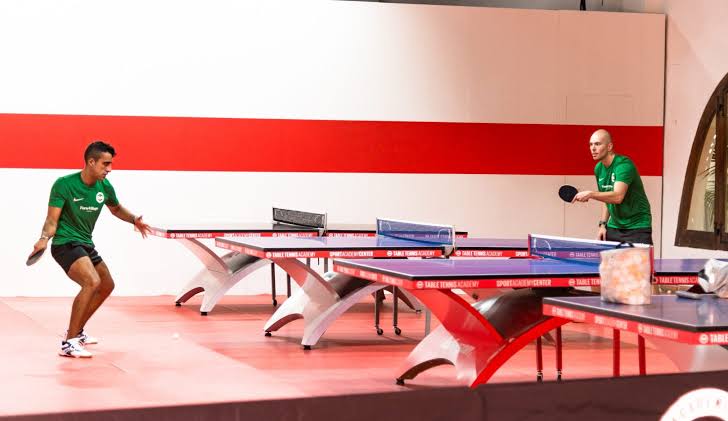
Table tennis is a fast, accessible, and exciting sport that can be enjoyed by people of many ages and skill levels. Often called ping-pong, the game combines quick reactions, coordination, strategy, and controlled movement. Beginners can start with simple rallies and gradually develop more advanced skills as they become comfortable with the paddle and ball.
For anyone discovering the sport for the first time, understanding its origins, basic rules, equipment, techniques, and benefits makes learning much easier. This guide from DEWACASH introduces the fundamentals of Table Tennis The Sport and explains why it remains such a popular recreational and competitive activity.
What Is Table Tennis?
Table tennis is a racket sport played on a rectangular table divided by a net. Players use small paddles, also called rackets or bats, to hit a lightweight ball back and forth across the net.
The objective is straightforward: hit the ball so that your opponent cannot make a legal return. Although the basic concept is easy to understand, table tennis can become highly strategic at competitive levels. Players use different spins, speeds, placements, and angles to create difficult returns.
The sport can be played as singles, with one player on each side, or doubles, with two players on each side.
A Brief History of Table Tennis
Table tennis developed as an indoor version of lawn tennis. Its early forms became popular in England during the late 19th century, when people experimented with playing tennis-inspired games indoors using tables and simple equipment.
Over time, the equipment and rules became more standardized. The sport spread internationally and eventually became a major competitive discipline.
The International Table Tennis Federation, commonly known as the ITTF, was established in 1926 and played an important role in organizing international competition and standardizing the sport.
Table tennis later became an Olympic sport at the 1988 Seoul Games. Since then, it has attracted a worldwide audience and produced highly competitive international tournaments.
Understanding the Table and Equipment
One reason table tennis is attractive to beginners is that you do not need an enormous amount of equipment to get started.
The basic setup includes a table, net, paddles, and table-tennis balls. A regulation table has a rectangular playing surface divided into two equal sides by a net.
A beginner does not necessarily need professional-level equipment. A comfortable paddle with suitable rubber, a reliable table, and appropriate balls are generally enough for recreational practice.
When choosing a paddle, beginners should prioritize comfort and control rather than immediately selecting equipment designed for advanced speed or heavy spin. Developing technique is more important than having expensive equipment.
Basic Rules of Gameplay
The scoring system is relatively simple. A standard game is generally played to 11 points, and a player must win by at least two points. Matches can consist of several games depending on the competition format.
Players alternate serves according to the rules. During a singles rally, the ball must generally bounce on the server’s side before crossing the net and bouncing on the receiver’s side.
After the serve, players return the ball so that it bounces on the opponent’s side. A player wins a point when the opponent fails to make a legal return or commits another fault under the applicable rules.
Doubles introduces additional rules, including a specific serving sequence and alternating hits between teammates. Beginners should learn singles first because it makes the basic movement and rally structure easier to understand.
Learning the Correct Grip
The way you hold the paddle has a major effect on control. Two common grips are the shakehand grip and the penhold grip.
The shakehand grip resembles the way you might hold someone’s hand. It is widely used because it provides a balanced foundation for both forehand and backhand strokes.
The penhold grip involves holding the paddle somewhat like a pen. It is particularly associated with certain playing styles and has been used successfully by many high-level players.
Beginners should choose a comfortable grip and avoid squeezing the paddle excessively. A relaxed grip allows better control and makes it easier to adjust the paddle angle.
Essential Table Tennis Techniques
The first skill beginners should develop is consistency. Being able to keep the ball on the table during a controlled rally is more useful initially than trying to hit every shot as hard as possible.
Forehand Stroke
The forehand is one of the fundamental table tennis shots. Start with a balanced stance, keep your knees comfortably bent, and position yourself so you can meet the ball in front of your body.
Use controlled arm and body movement rather than relying entirely on your wrist. Practice returning the ball at a moderate speed until you can maintain a consistent rally.
Backhand Stroke
The backhand is another essential skill. Beginners should practice making compact movements and keeping the paddle angle stable.
Because table tennis happens quickly, a compact backhand can help players react efficiently when the ball arrives close to the body.
Serving
Serving is particularly important because every rally begins with a serve. Beginners should first learn to make legal, consistent serves before focusing on complicated variations.
As skills improve, players can experiment with different placements and spins. A well-controlled serve can make it harder for an opponent to make an aggressive return.
Footwork
Good footwork helps players reach the ball while maintaining balance. Instead of standing completely still, beginners should remain ready to move in different directions.
Small, controlled steps are usually more effective than large, rushed movements. Practicing movement alongside simple strokes can help develop better coordination.
Understanding Spin
Spin is one of the features that makes table tennis especially interesting. Players can put different types of spin on the ball by brushing it with the paddle.
Topspin generally causes the ball to rotate forward, while backspin produces the opposite rotation. Sidespin causes the ball to rotate laterally and can influence its direction after bouncing.
Beginners do not need to master every type of spin immediately. Start by learning to recognize how spin affects the ball and gradually introduce controlled spin into practice sessions.
Common Beginner Mistakes
New players often focus too much on hitting the ball hard. Power can be useful, but control should come first.
Another common mistake is standing too upright or remaining completely stationary. A balanced stance and simple footwork make it easier to respond to different shots.
Beginners may also grip the paddle too tightly. Excessive tension can reduce control and make movement less comfortable.
Finally, trying advanced techniques before developing basic consistency can make learning unnecessarily difficult. Start with simple rallies and progress gradually.
Benefits of Playing Table Tennis
Table tennis offers several physical and mental benefits. Because rallies require constant attention, the sport encourages players to develop hand-eye coordination and quick reactions.
Regular recreational play also involves movement, balance, and agility. The intensity can vary considerably depending on the style of play, making it suitable for different levels of fitness.
The sport also encourages concentration and strategic thinking. Players must observe where the ball is going, anticipate an opponent’s actions, choose appropriate shots, and adjust their positioning quickly.
Perhaps most importantly, table tennis can be social. Playing with friends, classmates, family members, or other members of a local club can make physical activity enjoyable and provide motivation to keep practicing.
How Beginners Can Practice Effectively
A simple practice routine can produce better results than trying to learn everything at once. Begin with basic forehand and backhand rallies, concentrating on control and consistency.
Next, spend time practicing serves. Once you can serve reliably, work on returning different types of shots.
Short practice sessions performed regularly can be more manageable than occasional sessions where you try to learn too many techniques at once. You can also record your practice or ask an experienced player for feedback on your stance, grip, and stroke mechanics.
Most importantly, treat mistakes as part of learning. Missing the table or misreading a spin is normal when developing a new skill.
Final Thoughts
Table tennis is an excellent sport for beginners because the basic concept is easy to understand while the possibilities for improvement are almost endless. From learning the correct grip and basic strokes to developing footwork, serving, spin, and tactical awareness, players can continually add new skills.
Its relatively simple equipment requirements and adaptable pace also make it suitable for casual recreation as well as serious competition. Whether your goal is to play with friends, become more active, or eventually compete, learning the fundamentals provides a strong foundation.
With patience, regular practice, and a focus on control rather than simply hitting harder, beginners can quickly become more comfortable at the table. As highlighted by DEWACASH, understanding the sport’s origins, gameplay, equipment, techniques, and benefits is a useful first step toward enjoying everything table tennis has to offer.
