

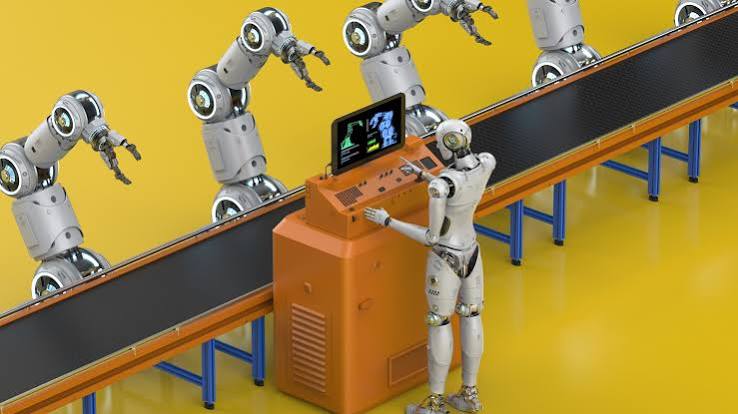
Robotics technology is one of the most transformative fields in modern engineering and science, focused on designing, building, and operating machines that can perform tasks traditionally done by humans. These machines, known as robots, are becoming increasingly intelligent, autonomous, and capable of performing complex operations across industries such as manufacturing, healthcare, space exploration, defense, and everyday life.
With the rapid advancement of artificial intelligence, machine learning, and sensor technology, robotics has evolved from simple mechanical systems into highly sophisticated intelligent machines. Today, robots are not only used in factories but are also entering homes, hospitals, and even space missions, reshaping the way humans live and work.
What is Robotics Technology?
Robotics technology refers to the branch of technology that deals with the creation, design, programming, and application of robots. A robot is a programmable machine capable of carrying out a series of actions automatically or semi-automatically, often with the help of sensors, actuators, and control systems.
Robotics combines multiple fields such as mechanical engineering, electrical engineering, computer science, and artificial intelligence. This interdisciplinary nature allows robots to perform physical tasks while also making decisions based on data and environmental inputs.
How Robotics Technology Works
Robots function through a combination of hardware and software systems that work together to perform specific tasks. Sensors are used to collect information from the environment, such as light, temperature, motion, or distance. This data is then processed by a central control system or computer brain that interprets the information and decides the appropriate action.
Once a decision is made, actuators such as motors, hydraulic systems, or pneumatic systems execute the physical movement. For example, in an industrial robot arm, sensors detect the position of objects, the control system calculates the required movement, and actuators move the arm to complete the task.
Modern robots also rely heavily on artificial intelligence, which allows them to learn from experience, adapt to new environments, and improve performance over time without constant human programming.
Types of Robots
There are several types of robots designed for different purposes and environments. Industrial robots are widely used in manufacturing industries for tasks such as welding, painting, assembly, and packaging. These robots improve efficiency, precision, and productivity in production lines.
Service robots are designed to assist humans in everyday tasks such as cleaning, delivery, and customer service. Examples include robotic vacuum cleaners and delivery robots used in hotels and hospitals.
Medical robots are used in healthcare for surgeries, rehabilitation, and patient care. These robots enable highly precise surgical procedures and reduce risks associated with human error.
Exploration robots are used in space and underwater missions to explore environments that are dangerous or inaccessible to humans. Space rovers and deep-sea robots are key examples of this category.
Applications of Robotics Technology
Robotics technology has a wide range of applications across various sectors. In manufacturing, robots are used to automate production processes, resulting in higher efficiency and lower costs. They can operate continuously without fatigue, making them ideal for large-scale industrial operations.
In healthcare, robots assist doctors in performing complex surgeries with high precision and are also used for patient monitoring and rehabilitation. In agriculture, robots are used for planting, harvesting, and monitoring crop health, which helps increase food production and reduce manual labor.
In defense and security, robots are used for bomb disposal, surveillance, and reconnaissance missions, reducing risks to human soldiers. In space exploration, robotic systems are essential for exploring planets, collecting samples, and conducting experiments in extreme environments.
Benefits of Robotics Technology
Robotics technology offers numerous benefits, including increased productivity, improved accuracy, and enhanced safety. Robots can perform repetitive tasks with high precision, reducing errors and improving product quality in industries.
They also help reduce human involvement in dangerous environments, such as radioactive zones, deep https://gavangtv.llc/, or space missions. In addition, robotics contributes to cost savings in the long term by automating labor-intensive processes and increasing operational efficiency.
Robotics also supports innovation by enabling the development of smart systems that can interact with humans and environments in intelligent ways.
Challenges of Robotics Technology
Despite its advantages, robotics technology faces several challenges. One of the major challenges is the high cost of development and implementation, which can limit accessibility for smaller organizations.
Another challenge is the complexity of programming and maintaining robots, especially those that operate in dynamic and unpredictable environments. Ethical concerns also arise regarding job displacement, as automation may reduce the demand for human labor in certain industries.
Security is another concern, as advanced robots connected to networks can be vulnerable to hacking or misuse if not properly protected.
Future of Robotics Technology
The future of robotics technology is highly promising, with continuous advancements in artificial gavangtv, machine learning, and sensor technologies. Future robots are expected to become more autonomous, intelligent, and capable of performing complex tasks with minimal human intervention.
In the coming years, we may see widespread use of humanoid robots in households, fully automated factories, and advanced robotic assistants in healthcare and education. Robotics will also play a major role in space colonization, disaster response, and environmental monitoring.
As technology evolves, robots are expected to become an integral part of daily life, working alongside humans in almost every industry and transforming the global economy.
Conclusion
Robotics technology is revolutionizing the way humans interact with machines and the environment. It has already made significant contributions to industries such as manufacturing, healthcare, and exploration, and its potential for future development is enormous.
Although challenges such as cost, ethics, and security remain, continuous innovation is making robots more intelligent, affordable, and accessible. In the future, robotics will play a central role in building a highly automated, efficient, and technologically advanced world.
As humanity moves forward, robotics technology will continue to bridge the gap between human intelligence and machine capability, shaping the future of work and life.
