

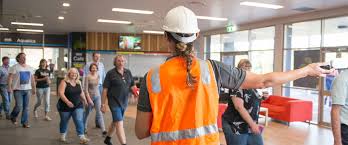
Workplace safety has shifted from being a compliance checkbox to a core part of how Australian organisations protect their people, reputation and continuity. Fire, medical incidents and other emergencies rarely give warning, and the first few minutes of any event often determine whether it stays controlled or spirals into chaos.
That’s why having trained wardens and a confident response team is just as important as having alarms, extinguishers and evacuation diagrams. The difference today is that much of this training can be delivered more efficiently and consistently through modern online and blended programs.
This article explores how online warden and emergency response training helps businesses build a safer workplace without overwhelming rosters, operations or budgets.
Why Wardens Are the Backbone of Workplace Emergency Response
Every building needs more than equipment; it needs people who know what to do. Floor wardens, area wardens and chief wardens form the human backbone of any emergency plan. They are the ones who:
- Recognise when an incident is serious enough to escalate
- Coordinate evacuations or shelter-in-place instructions
- Communicate with emergency services and keep occupants informed
In a real event, staff look for calm, authoritative figures to follow. Without trained wardens, even well-written procedures can fall apart as panic and confusion set in.
Online and blended warden training online australia programs make it much easier to ensure you have enough people in these roles across all floors, shifts and departments. Staff can complete foundational modules at a time that suits them, then reinforce that knowledge through onsite drills and scenario-based exercises.
The Case for Moving Warden Training Online
Traditionally, warden training relied on in-person sessions that could be hard to schedule around rosters, part-time workers and shift coverage. Online delivery changes that dynamic in several important ways.
First, it improves consistency. Every participant receives the same core content, aligned with Australian Standards and current best practice, instead of relying on different facilitators or ad-hoc internal briefings. New starters can be brought up to speed quickly, rather than waiting months for the next classroom session.
Second, it increases flexibility. Staff can complete modules on any connected device, revisit sections they find challenging, and refresh their knowledge before drills or high-risk periods (for example, hot summer conditions or shutdown works).
Third, it makes maintenance easier. When procedures, site layouts or legislation change, course content can be updated centrally. That means you are not left circulating old slide decks or outdated handouts that no longer match your current environment.
For organisations with multiple sites, online training also provides a way to standardise expectations while still allowing for site-specific procedures to be layered on through local inductions and exercises.
Bridging the Gap Between Training and Real-World Response
Training alone does not guarantee effective response. What matters is how well people can translate what they have learned into calm, coordinated action under stress.
This is where well-designed emergency response programs shine. Rather than flooding staff with theory, they focus on practical, scenario-based learning. Typical modules walk wardens and key personnel through realistic situations: a small kitchen fire that spreads rapidly, a medical emergency in a remote area of the site, a power outage during peak occupancy, or a fire alarm during severe weather when evacuation routes may be affected.
By practising decisions in a safe environment, wardens become more confident in recognising when to escalate, how to use communication tools and how to prioritise vulnerable occupants such as visitors, contractors or people with mobility needs.
Many organisations choose to complement online learning with local drills and tabletop exercises. In these sessions, wardens test the procedures specific to their building: where to assemble, which doors or lifts are out of bounds, how to account for staff on flexible work arrangements and who is responsible for liaising with emergency services on arrival.
Over time, this combination of digital learning and live practice helps embed emergency response as a normal part of workplace culture rather than a once-a-year interruption.
Why Emergency Response Training Matters in Melbourne Workplaces
Melbourne businesses operate in a complex environment. High-rise offices, mixed-use buildings, health facilities, industrial estates and education campuses each carry very different risk profiles. Add in extreme weather events, infrastructure outages and large numbers of visitors, and it becomes clear that generic, one-size-fits-all instructions are not enough.
Targeted emergency response training melbourne programs take local conditions, building types and occupancy patterns into account. For example, a CBD office might focus heavily on vertical evacuations, inter-floor communication and coordination with building management, while a suburban warehouse may prioritise hazardous materials, plant shutdown procedures and traffic management in loading areas.
The goal is always the same: reduce confusion, speed up safe decision-making and ensure that everyone on site knows who to listen to and where to go when an alarm sounds.
When training aligns with the specific realities of a Melbourne workplace, staff are more likely to take it seriously and remember it. They can see how the content relates to the stairwells, corridors and workspaces they use every day.
Measuring and Maintaining Readiness Over Time
One of the advantages of digital and blended training is that it provides measurable data. You can see who has completed which modules, when refresher training is due and where knowledge gaps might exist.
This helps WHS leaders and building managers answer important questions:
- Do we have enough trained wardens on each floor and shift?
- Are there departments with low completion rates that need extra support?
- Have new hires in critical areas completed their emergency training?
By treating these metrics like any other business KPI, organisations can move from a reactive stance (“we’ll deal with problems if an inspector asks”) to a proactive one (“we know our current level of readiness and are improving it each quarter”).
Partnering with a specialist provider such as First 5 Minutes means you have access not only to online content, but also to experienced trainers who can help interpret results, design effective drills and keep your emergency procedures aligned with best practice.
Creating a Safer, More Confident Workplace
Ultimately, the value of online warden and emergency response training is measured in confidence: the confidence of wardens who know what to do, the confidence of staff who trust their leaders, and the confidence of management who can demonstrate due diligence to regulators and insurers.
By investing in structured, accessible training and integrating it with practical exercises, Australian businesses can move beyond minimum compliance and build workplaces where everyone is better prepared for the unexpected.
In an emergency, those first five minutes matter most. The work you do now to train and support your wardens and response teams is what ensures that, when it counts, your people respond with clarity instead of confusion.
