

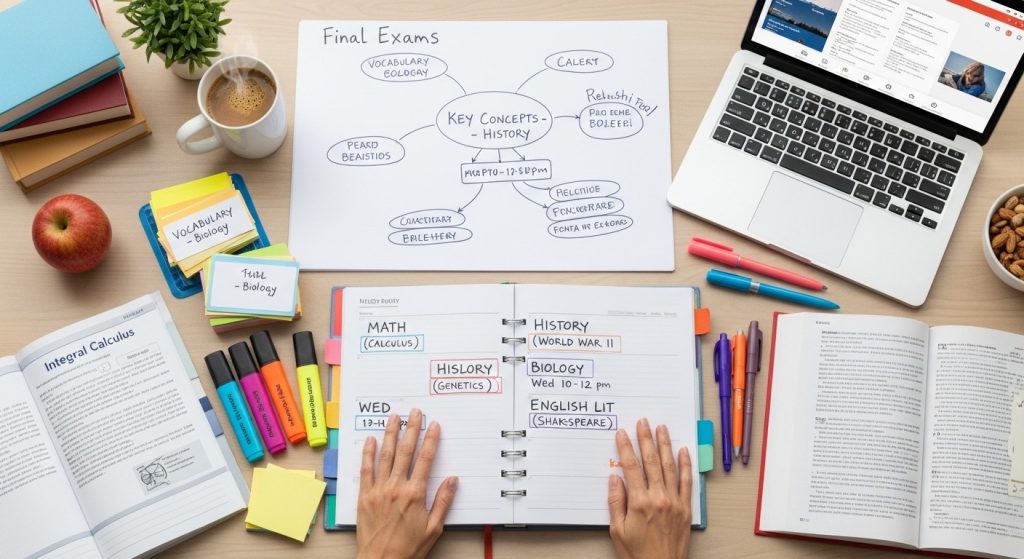
Final exams are often the most stressful part of a student’s academic life. Whether you’re in high school, college, or preparing for a certification, the pressure to perform well can feel overwhelming. But the truth is, passing your exams isn’t about burning the midnight oil the night before, it’s about being consistent, strategic, and balanced in your approach.
In this complete guide, we’ll explore effective tips not just for examination preparation, but also for staying motivated, handling stress, and performing your best on exam day. If you’re wondering how to pass the examination season with confidence and success, read on.
1. Build the Right Mindset
Success starts in the mind. Before opening a book, take a moment to focus on your mindset. A positive, determined attitude can transform your preparation.
Tips for a positive study mindset:
- Believe you can improve with effort.
- Avoid saying “I can’t.” Instead say, “I’ll try again.”
- Visualize your success regularly.
A strong mindset is the foundation for all good study habits.
2. Plan Ahead with a Study Schedule
One of the most powerful tools in your exam success toolkit is a well-structured study plan. Start preparing weeks in advance—don’t leave things for the last minute.
How to build a study schedule:
- Break your syllabus into smaller chunks.
- Set daily, weekly, and monthly study goals.
- Prioritize subjects and topics based on difficulty.
- Include buffer days for review and emergencies.
Stick to your plan as closely as possible, but also stay flexible enough to adjust if something unexpected comes up.
3. Study Smarter, Not Harder
Simply reading notes isn’t enough. Use active learning techniques to retain information more effectively.
Smart study techniques:
- Summarize notes in your own words.
- Teach someone else what you learned.
- Use mnemonics and acronyms for memorization.
- Use tools like Homework Helper to explain tough topics fast.
- Practice past papers under timed conditions.
If you’re aiming to pass the examination confidently, practicing how you’re going to be tested is essential.
4. Understand the Exam Format
Don’t just study the content—study the exam itself. Know what to expect so you can prepare accordingly.
Know the format:
- Is it multiple choice, essays, short answers, or problem-based?
- How much time will you have?
- What’s the marking scheme?
- Are there any negative marks for wrong answers?
Being familiar with the format helps reduce anxiety and allows you to tailor your preparation effectively.
5. Take Strategic Breaks
Studying non-stop can lead to burnout. Your brain needs rest to absorb and store information.
Best ways to take breaks:
- Use the Pomodoro Technique (25 min study, 5 min break).
- Take a longer break after every 3–4 sessions.
- Stretch, go for a walk, or listen to calming music.
Your breaks should refresh you—not distract you.
6. Avoid Distractions and Stay Focused
Distractions are the number one enemy of exam preparation.
How to stay focused:
- Study in a quiet, organized environment.
- Keep your phone in another room or use apps like Forest or Focus Mode.
- Use noise-cancelling headphones or calming background music.
Discipline in your environment equals discipline in your mind.
7. Manage Stress and Anxiety
Even if you’ve studied well, stress can sabotage your performance. Learn to manage it before it manages you.
Stress-reducing techniques:
- Practice deep breathing and meditation daily.
- Take short walks in nature.
- Avoid comparing yourself to others.
- Talk to someone, a friend, family member, or counselor.
Stress is normal, but don’t let it become the main character in your exam story.
8. Get Enough Sleep
Sleep is not a luxury, it’s a necessity. Lack of sleep affects memory, focus, and problem-solving skills.
Sleep tips during exam season:
- Aim for 7–8 hours each night.
- Avoid screens at least 1 hour before bed.
- Keep a regular sleep schedule even on weekends.
All-nighters may seem productive, but they usually do more harm than good.
9. Eat and Drink Smart
Your brain runs on fuel. Don’t sabotage your success with junk food or dehydration.
Brain-friendly foods:
- Nuts, seeds, and dark chocolate.
- Fruits like blueberries and bananas.
- Green leafy vegetables.
- Plenty of water keeps a bottle nearby while studying.
Avoid too much caffeine and sugar. They might give short-term energy but lead to crashes later.
10. Time Management During the Exam
When exam day arrives, knowing how to manage your time can be a game-changer.
During the exam:
- Read instructions carefully before starting.
- Allocate time based on marks (e.g., don’t spend 20 minutes on a 5-mark question).
- If stuck, skip and return later.
- Reserve the last 10–15 minutes for checking your work.
Time awareness can help you avoid panic and improve accuracy.
11. Use Study Groups (Wisely)
Studying with others can be helpful—but only if the group is focused and disciplined.
Study group benefits:
- Explaining concepts out loud helps reinforce learning.
- You get exposed to different perspectives and techniques.
- Accountability increases—you’re less likely to procrastinate.
Avoid groups that become social hangouts. Keep sessions structured.
12. Take Care of Your Mental Health
Exams are important, but your mental well-being matters more.
Check in with yourself:
- Are you feeling overwhelmed every day?
- Are you getting irritated or losing focus quickly?
- Are you isolating yourself too much?
Talk to a friend, teacher, or mental health professional if needed. You don’t have to go through this alone.
13. The Day Before the Exam
The final 24 hours are critical. Don’t overload your brain.
What to do:
- Review summaries and key points only.
- Pack your bag (ID, stationery, calculator, etc.).
- Eat light, sleep early, and relax your mind.
Trust your preparation. You’ve done the work.
Final Thoughts
Studying for final exams is a marathon, not a sprint. By starting early, planning strategically, using active learning techniques, and taking care of your wellbeing, you’ll maximize your chances of success. Remember, the goal is not just to pass, but to truly understand and retain the knowledge you’ve worked so hard to acquire.
Stay positive, believe in yourself, and approach each exam as an opportunity to demonstrate your growth. Good luck!