

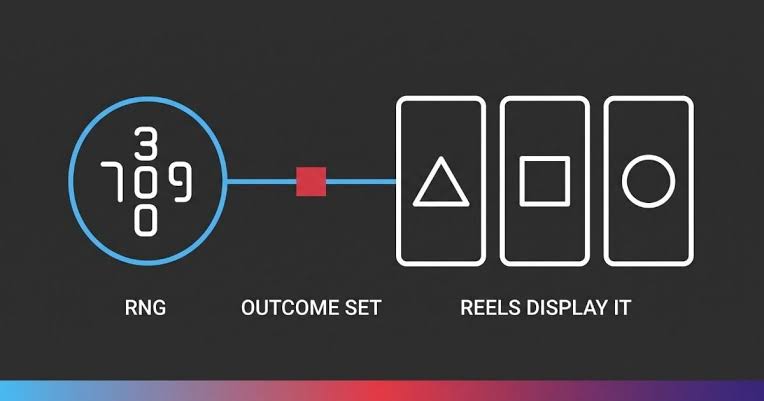
Behind the colorful reels, animated symbols, and interactive features of online slot games lies a sophisticated network of servers responsible for processing enormous amounts of information. While players may only notice a spinning animation lasting a few seconds, the underlying technology performs several complex operations to ensure that each game request is processed accurately, securely, and efficiently.
A modern slot game server is designed to manage simultaneous gaming sessions, generate random outcomes, validate transactions, maintain account balances, and communicate with connected devices. When thousands of users interact with a gaming platform at the same time, these processes must operate without creating unnecessary delays or compromising the integrity of game results.
Understanding online slot server architecture provides valuable insight into the engineering principles behind high-performance gaming platforms. From random number generators and distributed databases to cloud computing and load-balancing technology, every component contributes to the stability and scalability of a modern slot gaming system.
Understanding the Architecture of an Online Slot Game ServerWhat Is a Slot Game Server?
A slot game server is a backend computing system responsible for executing the essential operations of online slot games. Unlike the frontend interface, which displays reels, animations, and interactive controls, the server handles game calculations, session management, financial transactions, and outcome generation.
Whenever a player initiates a spin, the application sends a request to the backend server. The system validates the request, checks the applicable game conditions, determines the outcome using its approved mathematical configuration, and returns the result to the player’s device. This process allows the graphical interface and authoritative game logic to operate separately while maintaining a consistent gaming experience.
How Frontend and Backend Systems Work Together
Online slot platforms rely on communication between frontend applications and backend services. The frontend provides the visual environment, including buttons, game menus, animations, and sound effects, while the backend manages the operational logic that determines how the system responds to user activity.
These components typically communicate through secure application programming interfaces, commonly known as APIs. When the player presses the spin button, the frontend submits a request containing relevant session and wager information. The backend then processes the request and returns the necessary data for displaying the result. This architecture allows developers to improve the user interface without changing the underlying mathematical rules of the game.
How Slot Game Servers Process Thousands of Spins Per SecondThe Complete Processing Cycle of a Slot Spin
Every online slot spin follows a structured sequence of operations designed to maintain accuracy and consistency. The process begins when a gaming application sends a spin request to the server. The backend verifies the player’s session, validates the selected wager, and checks whether the request satisfies the game’s operational requirements.
Once the request is accepted, the game engine determines an outcome using its configured randomization and payout rules. The system then records the relevant transaction, updates the necessary account information, and returns the completed result to the gaming application. Although these operations can occur rapidly, each stage must be coordinated carefully to prevent duplicate transactions or inconsistent game records.
Parallel Processing and High-Volume Requests
Processing thousands of spins per second requires a server architecture capable of handling numerous requests concurrently. Rather than forcing every request through a single sequential process, modern platforms use asynchronous operations, multiple processing resources, and distributed services to execute independent tasks simultaneously.
Concurrency significantly improves system throughput, but it also introduces challenges when multiple operations interact with shared resources. For example, several requests affecting the same account must be coordinated to prevent incorrect balance calculations. Reliable high-performance gaming servers therefore combine parallel processing with carefully designed transaction controls that preserve data accuracy under demanding workloads.
Measuring Server Throughput and Processing Capacity
Server throughput describes the number of operations a system can complete within a specific period. For online gaming platforms, performance engineers may measure completed spins per second, application requests per second, or financial transactions processed during a defined interval.
A system processing 5,000 spins every second could theoretically complete 300,000 spins per minute if that level of performance were sustained. However, each spin may involve several internal service requests, making total system activity substantially more complex than the number of visible game actions. Actual performance depends on processing resources, database efficiency, network latency, application architecture, and the complexity of individual game transactions.
The Role of Random Number Generators in Slot Server TechnologyHow Random Number Generators Determine Game Outcomes
Random number generation is one of the most important technical functions within an online slot gaming system. A random number generator (RNG) produces values that the game engine uses to select outcomes according to predefined mathematical rules and probability distributions.
In many software-based systems, pseudorandom number generators use mathematical algorithms to produce sequences suitable for the intended application. The generated values are interpreted through the game’s reel configuration, symbol distribution, and payout structure. This process determines the resulting combinations and associated game events, while the visual interface presents those results through animations and graphical effects.
Why RNG Integrity Matters for Fair Gameplay
The integrity of a random number generator is essential for maintaining the mathematical consistency of a slot game. Properly designed and regulated systems must follow applicable technical standards and approved game configurations rather than adjusting individual outcomes based on player behavior.
Previous wins or losses should not create an obligation for subsequent spins to produce particular results. Likewise, pressing the spin button at a specific moment does not provide a reliable method of predicting outcomes. Independent testing laboratories may evaluate RNG implementations, statistical properties, and game mathematics to determine whether they satisfy relevant technical and regulatory requirements.
Maintaining RNG Performance During Heavy Traffic
When a platform experiences high levels of concurrent activity, the game engine must generate outcomes efficiently while preserving the integrity of its randomization system. Although producing random values may require relatively little computing power, integrating those values with game-state management, wallet transactions, and result recording creates additional processing demands.
Developers must ensure that concurrent requests do not improperly share or alter generator state. Suitable algorithms, secure initialization procedures, controlled access to sensitive components, and comprehensive testing help maintain consistent operation even when substantial numbers of spins are being processed simultaneously.
Database Management and Financial Transaction AccuracyHow Slot Servers Manage Player Balances
Accurate balance management is a fundamental responsibility of an online slot gaming platform. Each accepted wager and applicable payout must be recorded correctly to ensure that the account information displayed to users reflects completed financial transactions.
Transactional databases provide mechanisms for controlling simultaneous updates and maintaining consistent records. Features such as atomic operations, integrity constraints, and transaction isolation help prevent conflicting changes when multiple requests affect the same account. These safeguards allow the gaming platform to process transactions efficiently without sacrificing the accuracy of its financial information.
Preventing Duplicate Spins and Transaction Errors
Network interruptions can create situations in which a player submits a spin request but does not immediately receive confirmation. If the application automatically retries the request, the server must determine whether the original operation was already processed.
Idempotency mechanisms address this challenge by associating unique identifiers with individual logical transactions. When a duplicate request arrives, the backend can identify the existing operation and return its recorded result rather than executing the same wager again. This approach is particularly valuable for maintaining financial consistency during temporary connection failures or periods of intensive server traffic.
How Database Caching Improves Performance
Caching helps reduce unnecessary database activity by storing frequently requested information in a location that can be accessed quickly. Gaming platforms may cache game descriptions, configuration details, static assets, and selected non-sensitive application data to improve response times.
Technologies such as Redis can support efficient retrieval and temporary data management. However, authoritative financial records require stronger consistency guarantees than ordinary cached information. Developers must carefully distinguish between data suitable for caching and transactions that must remain controlled by the primary financial system.
Load Balancing and Distributed Gaming InfrastructureWhy Load Balancers Are Important for Slot Servers
A load balancer distributes incoming application traffic across multiple backend servers. Instead of allowing one machine to process every request independently, the platform directs connections toward available resources according to predefined routing strategies.
This distribution reduces the risk of individual servers becoming overloaded and helps maintain consistent response times during periods of heavy activity. Load balancers can also detect unhealthy application instances and direct new requests toward functioning servers. However, comprehensive reliability depends on the availability of databases, wallet services, and other critical backend components.
Horizontal Scaling and Vertical Scaling Explained
Vertical scaling increases the resources of an existing server by adding processing power, memory, or storage capacity. Horizontal scaling expands the system by introducing additional server instances and distributing the workload among them.
For large online gaming platforms, horizontal scaling often provides greater flexibility because application capacity can increase as demand grows. Nevertheless, shared components such as account databases and financial transaction services may require specialized scaling strategies. Effective infrastructure planning evaluates both approaches according to workload characteristics, operational costs, and consistency requirements.
Microservices Architecture for Modern Slot Platforms
Microservices architecture divides a complex application into smaller services responsible for specific functions. A gaming platform may operate separate components for authentication, game processing, wallet management, account services, reporting, and technical monitoring.
This separation allows individual services to be developed, maintained, and scaled according to their requirements. For example, additional game-processing capacity may be introduced during periods of intensive gameplay without necessarily expanding every other component. However, distributed architecture also introduces challenges involving network communication, service coordination, failure recovery, and operational visibility.
Network Latency and Real-Time Slot Game PerformanceUnderstanding Latency in Online Slot Games
Latency represents the time required for information to travel between a player’s device and the server, including the time spent processing the request. High latency may cause noticeable delays when starting a spin, opening game features, or receiving transaction confirmations.
Several factors contribute to latency, including physical distance, internet connection quality, application processing, and database response times. Engineers evaluate the complete request lifecycle to identify where delays occur. A powerful server alone cannot guarantee fast performance when network connections or dependent backend services introduce significant waiting time.
How Content Delivery Networks Improve Website Speed
A content delivery network, commonly called a CDN, distributes website resources across geographically separated servers. This allows static content such as images, scripts, audio files, and interface elements to be delivered from locations closer to individual users.
By reducing the distance traveled by frequently requested content, CDNs can improve page loading speed and reduce unnecessary traffic to central application servers. However, authoritative wagering operations generally still require communication with trusted backend services. Proper system design separates cacheable content from sensitive transactions that demand secure and consistent processing.
WebSockets and Persistent Server Connections
WebSockets enable persistent communication between gaming applications and backend systems. Unlike conventional HTTP exchanges that follow individual request-response cycles, persistent connections can efficiently deliver ongoing updates without repeatedly establishing new communication sessions.
Gaming platforms may use this technology for shared jackpot information, tournament notifications, or other frequently changing data. However, not every game requires persistent connections for ordinary spins. Developers select communication technologies according to application requirements, expected traffic, network reliability, and security considerations.
Cloud Computing and Automated Server ScalingHow Cloud Infrastructure Supports Online Slot Gaming
Cloud computing provides gaming operators with flexible access to computing resources, networking services, databases, and storage systems. Instead of relying entirely on locally maintained physical infrastructure, developers can deploy application components across managed environments.
Cloud platforms may support geographic distribution, infrastructure redundancy, automated deployments, and flexible capacity management. These capabilities can help gaming systems respond to changing demand. Nevertheless, reliable operation still requires careful architecture, appropriate security policies, and compliance with applicable regulations.
The Role of Containers and Kubernetes
Container technology allows developers to package applications together with their required software dependencies. This approach supports consistent deployments across development, testing, and production environments.
Docker is commonly used for container packaging, while Kubernetes can coordinate deployments, service health monitoring, resource allocation, and scaling. A gaming platform may use container orchestration to introduce additional application instances when demand increases. However, scaling application containers cannot automatically resolve bottlenecks involving shared databases or constrained financial services.
Automated Scaling During Peak Gaming Hours
Player activity can fluctuate significantly throughout the day, creating periods of high and low server demand. Automated scaling systems monitor operational metrics and adjust application capacity according to predefined rules.
Metrics such as CPU utilization, memory consumption, request volume, and response latency help indicate when additional resources may be required. Predictive scaling can prepare infrastructure for expected traffic patterns, while reactive scaling addresses unexpected increases. Both approaches depend on accurate monitoring and realistic capacity planning.
Security Systems Protecting Online Slot Game ServersAPI Security and Player Authentication
Online slot gacor servers must protect application interfaces against unauthorized access, manipulated requests, and malicious activity. Authentication systems verify user identities, while authorization controls determine which operations each account is permitted to perform.
Encrypted communication protects information transmitted between clients and backend services. Additional safeguards include input validation, session management, access restrictions, and monitoring for abnormal behavior. Because client-side information can potentially be modified, the backend must independently verify sensitive actions such as wager authorization and account updates.
DDoS Protection and Traffic Management
Distributed denial-of-service attacks attempt to disrupt online services by generating excessive traffic or resource-intensive requests. High-volume gaming platforms may employ traffic filtering, rate limiting, network monitoring, and specialized mitigation systems to reduce their impact.
Effective protection involves distinguishing legitimate activity from potentially harmful requests while minimizing disruption to ordinary users. Infrastructure segmentation can also limit the consequences of attacks targeting individual services. These measures form part of a broader availability strategy rather than guaranteeing complete immunity from network threats.
Encryption and Transaction Audit Logs
Encryption helps protect sensitive information during transmission and, where appropriate, while stored. Access controls restrict administrative functions to authorized personnel, reducing the likelihood of accidental or malicious changes.
Transaction audit logs provide detailed records of important system events, including accepted wagers, account changes, security alerts, and operational activities. These records support troubleshooting, financial reconciliation, and regulatory reviews. Proper log management also requires retention policies, access restrictions, and safeguards against unauthorized modification.
Performance Testing and Server OptimizationLoad Testing and Stress Testing
Load testing evaluates how an application behaves under expected traffic levels, while stress testing examines its response when demand exceeds normal operating conditions. Both techniques are important for assessing the reliability of high-performance gaming platforms.
A realistic test environment should simulate gameplay requests, account operations, wallet transactions, and communication between backend services. Testing only the speed of random number generation does not accurately represent the full processing requirements of an online slot system. Engineers must evaluate complete workflows to identify practical capacity limitations.
Monitoring Response Time and Error Rates
Performance monitoring involves tracking indicators such as request throughput, server response time, resource utilization, and transaction failure rates. These measurements help technical teams identify bottlenecks and understand how system behavior changes under different workloads.
Percentile latency measurements are especially useful because average response times can conceal slow experiences affecting a portion of users. A platform may process thousands of requests every second while still experiencing reliability problems if significant numbers of transactions fail or require excessive processing time.
Maintaining Stability During Heavy Server Traffic
High traffic can expose weaknesses involving database connections, processing queues, shared resources, and dependent services. Developers address these challenges through carefully configured timeouts, bounded workloads, controlled retries, and backpressure mechanisms.
Reliable recovery procedures are equally important. When an application encounters an interruption, it must distinguish between completed transactions and operations that never finished. Accurate transaction records and controlled failure handling help preserve platform consistency while supporting stable operation during demanding conditions.
Frequently Asked Questions About Slot Game ServersHow Many Spins Can a Slot Game Server Handle Per Second?
A slot server’s capacity depends on its hardware, application architecture, database performance, and transaction-processing requirements. Distributed systems can be engineered to handle thousands of spins per second, but exact performance must be established through realistic testing.
Does Server Performance Affect Slot Winning Chances?
Server performance affects gameplay responsiveness and transaction-processing speed, but it should not change the approved mathematical rules governing slot outcomes. Faster servers do not inherently provide higher winning probabilities.
Why Do Online Slot Games Sometimes Experience Delays?
Delays may result from network instability, high server traffic, database bottlenecks, browser performance issues, or temporary interruptions affecting backend services. Identifying the actual cause requires monitoring the complete request-processing workflow.
Can Cloud Servers Support More Players Than Traditional Servers?
Cloud environments offer flexible resource allocation and automated scaling, but they do not automatically outperform traditional infrastructure. Actual capacity depends on engineering decisions, system optimization, and the performance of supporting services.
What Happens When a Slot Server Crashes During a Spin?
A properly designed gaming system maintains transaction records and recovery procedures that help determine whether a wager was accepted and whether an outcome was completed. These mechanisms support reconciliation and help prevent duplicate financial operations.
Are Random Number Generators Controlled by the Server?
In many online slot architectures, random outcome generation is performed by trusted backend components. The implementation must follow the game’s approved mathematical configuration and any relevant technical standards.
Why Are Load Balancers Necessary for Large Gaming Platforms?
Load balancers distribute incoming traffic across multiple application servers to improve resource utilization and reduce the risk of individual machines becoming overwhelmed. They also support availability by redirecting new requests away from unhealthy server instances.
What Technologies Are Commonly Used in Slot Gaming Servers?
Online gaming platforms may use technologies such as Node.js, Java, Go, relational databases, Redis, Docker, Kubernetes, load balancers, and cloud infrastructure. The appropriate technology combination depends on performance requirements, system complexity, security needs, and operational resources.