

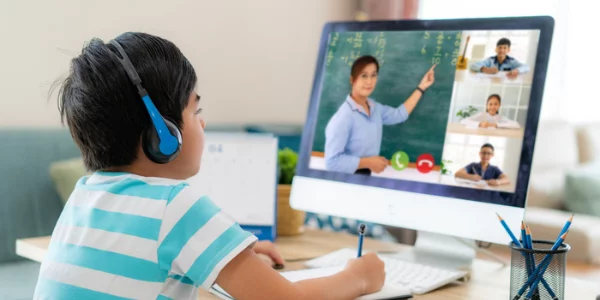
Have you ever wondered what it would be like to go to school without leaving your house? That’s exactly what a virtual classroom lets you do! A virtual classroom is like a regular classroom, but it happens on a computer or tablet instead of in a school building.
What Is a Virtual Classroom?
A virtual classroom is an online space where teachers and students meet to learn together. Instead of sitting at desks in a room, everyone joins from their own homes using the internet. The teacher can see the students on their screen, and students can see their teacher and classmates too.
Think of it like a video call, but made specially for learning. Students can raise their hands, ask questions, share their work, and learn new things, just like in a regular classroom.
How Does a Virtual Classroom Work?
Virtual classrooms use special computer programs called platforms. Some popular ones are Zoom, Google Classroom, and Microsoft Teams. Here’s what happens in a typical virtual class:
Before Class Starts: Students log in to their computer or tablet and join the online classroom. They might need a username and password to get in, just like logging into a game.
During Class: The teacher appears on the screen and can talk to everyone. Teachers can share their screen to show lessons, videos, or slideshows. Students can see everything the teacher is showing them.
Asking Questions: Students can type messages in a chat box or use a button to raise their hand. When the teacher calls on them, they can turn on their microphone and speak.
Doing Activities: Teachers can put students into small groups for projects. They can also send out quizzes, assignments, and fun activities that students complete online.
What Do You Need for a Virtual Classroom?
To join a virtual classroom, you need a few basic things:
A Device: This could be a computer, laptop, tablet, or even a smartphone. Any device that connects to the internet will work.
Internet Connection: You need wifi or internet service to join the class. The faster your internet, the better the class will run.
Camera and Microphone: Most devices have these built in. The camera lets your teacher and classmates see you, and the microphone lets them hear you when you talk.
Headphones: These aren’t required, but they help you hear better and reduce background noise.
A Quiet Space: It helps to have a spot in your home where you can focus without too many distractions.
The Good Things About Virtual Classrooms
Virtual classrooms have many benefits that make learning easier and more fun for some students.
Learn From Anywhere: You can join class from your home, a library, or even while traveling. As long as you have the internet, you can learn.
Save Time: You don’t need to ride a bus or drive to school. This gives you more time for learning, playing, and spending time with family.
Review Lessons: Many virtual classes are recorded. If you miss something or want to watch a lesson again, you can! This is really helpful when studying for tests.
More Comfortable: Some students feel more comfortable asking questions online than in person. The chat feature lets shy students participate without speaking out loud.
Access to More Classes: Virtual classrooms let students take classes that might not be available at their local school. You could learn a language from a teacher in another country!
Personal Learning Speed: Teachers can give students work that matches their level. If you need more time, you can work at your own pace on some assignments.
The Challenges of Virtual Classrooms
While virtual classrooms are great, they also have some challenges.
Technical Problems: Sometimes the internet stops working or the computer freezes. This can be frustrating when you’re trying to learn.
Distractions at Home: It’s easier to get distracted when you’re at home. Your pets, siblings, or toys might pull your attention away from class.
Less Social Time: You don’t get to see your friends in person during lunch or recess. This can make school feel lonely sometimes.
Screen Time: Spending many hours looking at a screen can make your eyes tired and give you headaches.
Need Self-Discipline: Virtual learning requires students to be responsible. You need to pay attention even when the teacher can’t see you as easily.
Tips for Success in a Virtual Classroom
Here are some ways to do well in online learning:
Create a Learning Space: Set up a special spot just for school. Keep it clean and organized with all your supplies nearby.
Follow a Schedule: Wake up at the same time each day and get ready like you’re going to regular school. This helps your brain know it’s time to learn.
Take Breaks: Every hour, stand up and stretch. Look away from the screen to rest your eyes. Take a snack break between classes.
Participate: Don’t just sit quietly. Ask questions, answer when the teacher calls on you, and join in discussions.
Stay Organized: Keep track of your assignments and due dates. Use a planner or calendar to remember what’s due when.
Communicate: If you’re having trouble understanding something or if your computer isn’t working, tell your teacher right away.
The Future of Virtual Classrooms
Virtual classrooms are becoming more popular every year. Even students who go to regular school sometimes take one or two classes online. Technology keeps getting better, making virtual learning feel more real and exciting.
In the future, virtual classrooms might use virtual reality headsets that make you feel like you’re actually in a classroom with your teacher and friends. They might also use artificial intelligence to help give each student personalized lessons.
Conclusion
Virtual classrooms have changed the way many students learn. They offer flexibility, convenience, and new opportunities that weren’t possible before. While they have some challenges, many students and teachers have found ways to make online learning work well.
Whether you’re learning from home full-time or just taking one online class, virtual classrooms are an important part of education today. With the right tools, attitude, and support, students can learn just as much online as they can in a traditional classroom.