


J-League Preview requires a deep understanding of the disciplined and tactical style of Japanese football. E39 provides continuous in-depth analysis before every kickoff, evaluating squad depth, current form, and strategies to offer the most accurate picture for each dramatic round of this top competition.
J-League Preview detailed analysis of key matches
At E39 , J-League Preview requires a multi-faceted view of the power dynamics between the league’s top forces. After a dense period of competition, each club has revealed distinct strengths and weaknesses in terms of personnel and tactics.
J-League Preview in-depth match analysis
Yokohama F. Marinos and Kawasaki Frontale set for a fierce contest
J-League Preview The showdown between Yokohama F. Marinos and Kawasaki Frontale always captures significant attention from players due to their entertaining attacking styles. In their last 30 encounters, Kawasaki Frontale has had the edge with 13 wins, while Yokohama F. Marinos secured 10 victories, and they drew 7 times.
| Team | Matches | Wins | Draws | Losses | Goal difference | Points | Head-to-head win rate |
| Yokohama F. Marinos | 3 | 2 | 0 | 1 | 5:4 (+1) | 6 | 33% |
| Kawasaki Frontale | 3 | 0 | 3 | 0 | 4:4 (0) | 3 | 43% |
Reigning champions Vissel Kobe face tough opponents
J-League Preview Vissel Kobe is showing relatively stable form with 3 wins in their last 5 appearances, thus affirming their position as title contenders. The team’s strength lies in their pragmatic play organization, maintaining reasonable formation spacing, and limiting gaps between lines. When facing opponents who tend to press high or launch quick counter-attacks, the Kansai representative usually prioritizes controlling the midfield, minimizing errors during ball circulation.
In defense, the coordination between the center-back pairing and supporting midfielders helps Vissel Kobe enhance their tackling, cover, and interception of runs into the penalty area. However, the challenge for the reigning champions will be greater when facing teams with fast attacks, flexible transition capabilities, or multi-layered defensive organization. To make a difference, Vissel Kobe needs to effectively utilize set pieces, maintain accuracy in decisive passes, and convert chances into goals.
J-League Preview between Sanfrecce Hiroshima and Kashima Antlers
Sanfrecce Hiroshima often exerts strong pressure with a flexible three-center-back formation, allowing the team to quickly transition between defense and attack. When building play, the wing-backs can push forward to widen the space, facilitating midfield coordination and delivering the ball into dangerous areas.
In particular, counter-attacks down the flanks help the purple-clad team exploit spaces behind the opponent’s defense, while crosses and central penetrations offer additional finishing options. According to the data presented in this analysis, Sanfrecce Hiroshima averages 14 shots per home game, indicating a tendency to actively seek opportunities rather than just waiting for opponent errors.
Conversely, Kashima Antlers can pose significant difficulties with their tight defensive organization, fierce tackling, and effective use of transition moments. If they can control the midfield well, the visiting team will limit Hiroshima’s passes to the wings and simultaneously seek opportunities from quick counter-attacks. J-League Preview suggests that this match could be decided by the ability to capitalize on set pieces, including corners, direct free kicks, and second balls around the box.
Match preview and head-to-head history before kickoff
The preparation process before the battle plays a decisive role in accurately predicting the outcome. Head-to-head history and recent performance streaks reflect the true competitive spirit and form of each team. Members who want to grasp the situation need to closely link on-field indicators with past data.
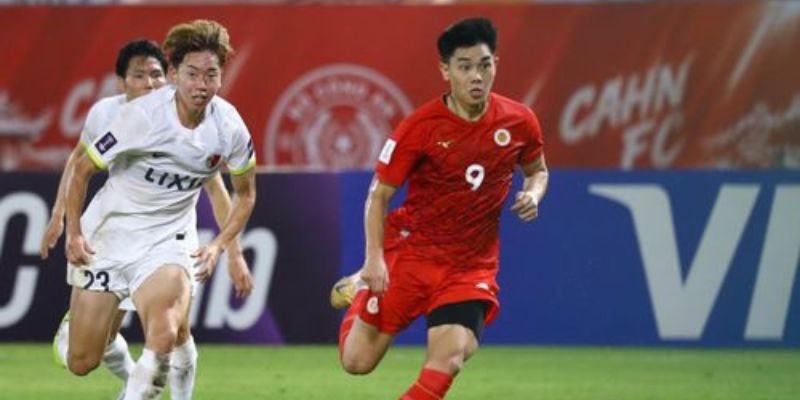
Comprehensive head-to-head form assessment
Home advantage of top clubs
Nissan Stadium has always been a strong spiritual support, helping Yokohama F. Marinos score up to 60% of their total goals in the second half. Enthusiastic cheers from the stands allow them to easily pressure opponents and completely control the game in the latter half.
Observing J-League Preview shows that visiting teams often face immense pressure here, especially when facing a continuous onslaught and relentless attacks from the flanks by the home team. This demanding situation forces the visitors to maintain a compact defensive shape, limit spaces between the lines, and capitalize on counterattacking opportunities to regain control of the match.
Jinx factor through years of encounters
Many matches in the Japanese national championship always have a strange jinx despite the difference in current standings. For example, Kawasaki Frontale, even in a rebuilding phase, often causes difficulties for top teams with sharp counter-attacks.
Data on attacking and defensive transitions
The speed of ball circulation between lines is the key factor shaping the playing style of the representatives of the Land of the Rising Sun. J-League Preview lightning-fast counter-attacks with deployment times under 8 seconds often bring the highest scoring efficiency for top teams.
| Team | 1st half scoring rate | 2nd half scoring rate | 1st half clean sheet rate | Average goals | Expected scoring chances for both teams |
| Yokohama F. Marinos | 50% | 60% | 80% | 1.7 goals/match | 30% |
| Kawasaki Frontale | 30% | 70% | 50% | 1.3 goals/match | 70% |
Key variables determining the match outcome
Besides pure strength, J-League Preview external factors and tactics always create unexpected turning points for the 90 minutes of play. The ability to rotate the squad, the physical condition, and substitution decisions can completely overturn all initial plans. Here are the practical criteria that cannot be ignored:
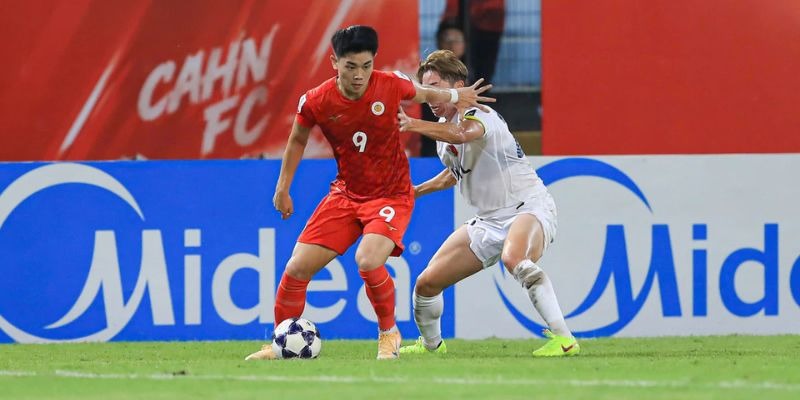
E39 assesses key variables determining the match
- The continuous travel schedule to international arenas has clearly worn down the physical strength of key players for Vissel Kobe and Kawasaki Frontale. Having to compete on three fronts forces the coaching staff to rotate the reserve squad in crucial rounds.
- The absence of defensive leaders or anchor midfielders always leaves vast gaps in the midfield of clubs. When a key link gets injured, the zonal defense system immediately reveals confusion in marking opponents from aerial situations.
- Substitution decisions after the 60th minute often bring about turning points, aiming to break the deadlock or solidify a fragile lead. J-League Preview‘s perspective shows that seasoned strategists in the league always know how to utilize the 5 substitution opportunities to change the game’s tempo, increase overall pressure, or proactively retreat to protect the result with discipline.
Conclusion
J-League Preview plays a key role in making the monitoring of top Japanese clubs more comprehensive and clear. E39 synthesizes expert data, deeply analyzes each tactical parameter and actual tournament fluctuations, creating accurate and reliable information to fully serve XỔ SỐ.
