

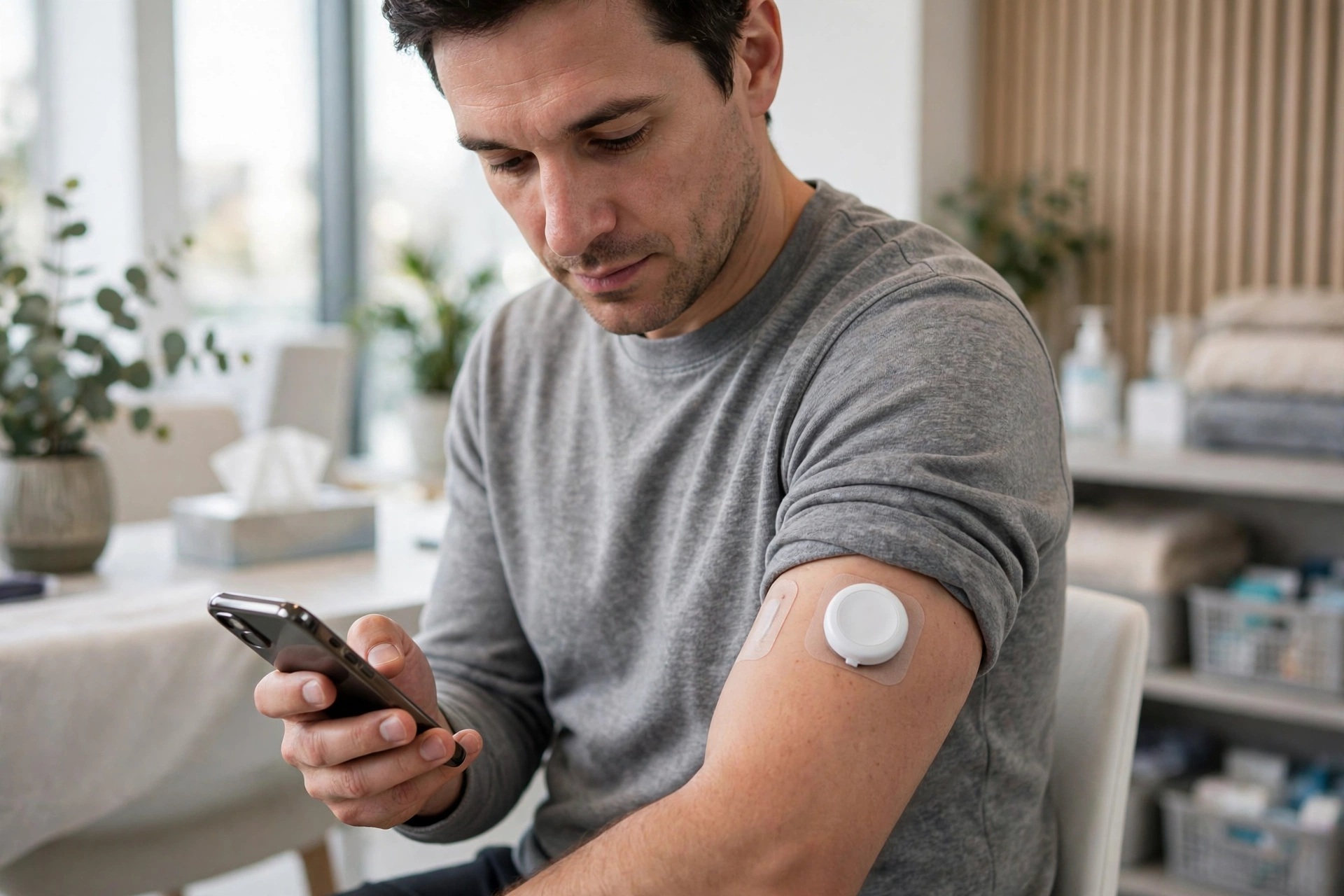
Continuous glucose monitors have transformed care for people who use insulin, but a major new clinical trial suggests their benefits reach much further. In the largest study of its kind, published in the New England Journal of Medicine, adults with type 2 diabetes who do not use insulin spent roughly five more hours a day in their target blood sugar range when they used a continuous glucose monitor. The finding could reshape how millions of people manage one of the world’s most common chronic conditions — and it offers a clear, hopeful lesson in how real-time feedback helps people make better daily decisions.
What the Trial Found
Continuous glucose monitors, often called CGMs, are small wearable sensors that measure glucose in the fluid just under the skin, typically on the arm or abdomen. Instead of a finger-prick test that gives a single reading at a single moment, a CGM tracks levels around the clock and shows whether they are rising, falling or steady. According to the research team’s summary of the trial, participants using the devices spent approximately five additional hours each day within their healthy target range compared with those managing without them.
Time in range matters because it captures the full picture of blood sugar control, not just an average. Long periods spent too high can damage blood vessels, nerves, eyes and kidneys over time, while dips too low can be immediately dangerous. Gaining five extra hours a day in the safe zone is therefore a meaningful improvement, especially for people whose diabetes has historically been considered less intensive to manage because they are not on insulin.
Why Feedback Changes Behaviour
The deeper lesson of the study is about information. When people can see, in real time, how a meal, a walk or a stressful day affects their glucose, the cause and effect become impossible to ignore. A breakfast that quietly spikes blood sugar for three hours is visible on the graph. So is the benefit of a short walk after lunch, which can flatten that curve noticeably. Over weeks, those small observations turn into habits, and habits are what long-term blood sugar control is really built on.
Health educators make a similar point about technology in general: tools work best when they help people understand their own choices rather than simply collecting data. It is the same principle behind the classroom discussion in our article on the new daycare debate about technology — the value of a device depends on how thoughtfully it is used.
Who Could Benefit Most
Type 2 diabetes affects hundreds of millions of adults worldwide, and the large majority do not use insulin. Until now, CGMs have often been reserved for people on intensive insulin therapy, partly because of cost and partly because the evidence for wider use was incomplete. A trial of this scale strengthens the case for expanding access, particularly for patients whose blood sugar remains above target despite medication, or who struggle to understand which foods and routines affect them most.
There are practical questions to answer first. Sensors must be replaced regularly, the data needs reviewing with a clinician, and health systems will have to decide who is offered the technology and how it is paid for. Privacy also deserves attention, because continuous health data is sensitive; our guide to managing notifications and privacy settings is a useful starting point for anyone sharing health information through apps.
What Patients Should Do Now
Doctors caution that a monitor is a tool, not a treatment on its own. The trial’s results came from people who could act on the information the sensor provided — adjusting meals, activity and medication conversations with their care team. Anyone with type 2 diabetes who is curious about CGM should raise it at their next appointment rather than buying a device on impulse, because interpretation of the readings matters as much as the readings themselves.
Still, the direction of travel is clear. Diabetes care is moving from occasional snapshots to continuous understanding, and from guesswork to personalised feedback. Five more hours a day in a healthy range, multiplied across months and years, could mean fewer complications and a better quality of life for a great many people. For students of health and science, the study is also a neat reminder of why large, well-run clinical trials matter: they turn a promising idea into evidence that can genuinely change everyday care.
