

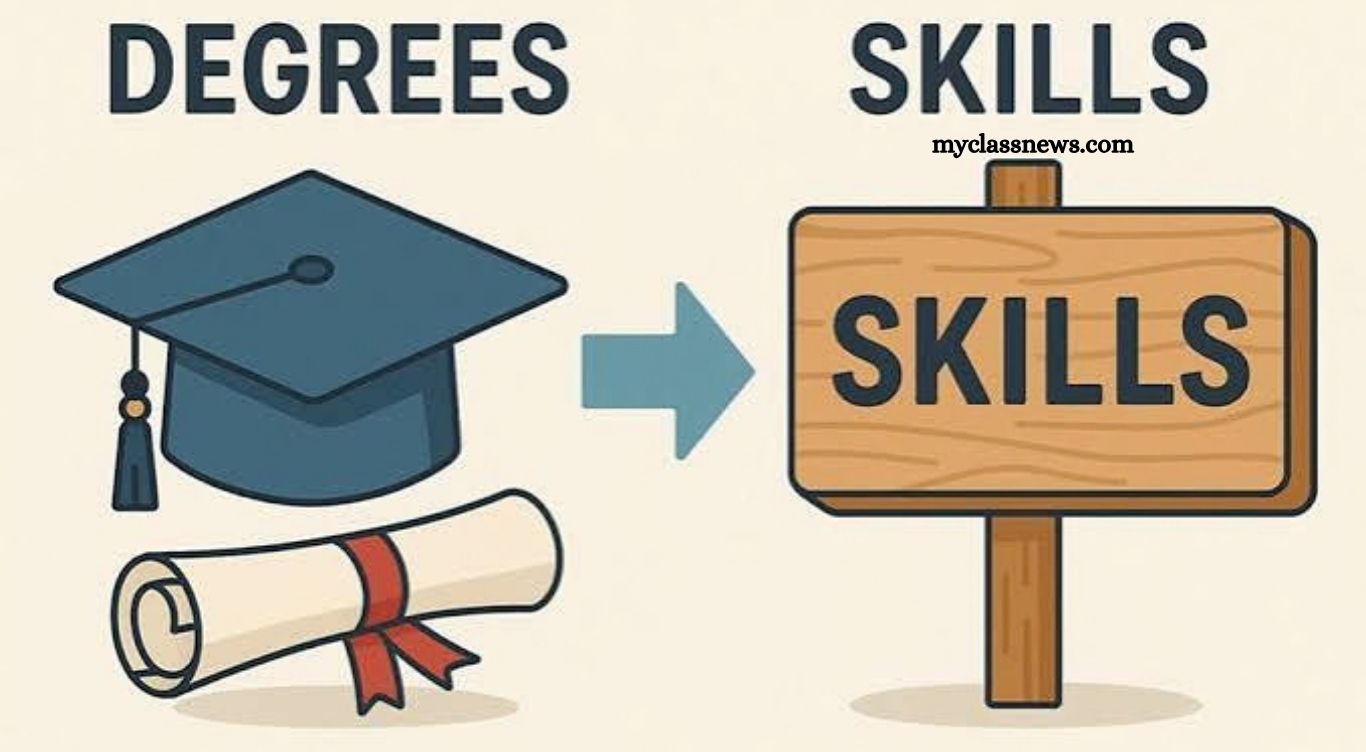
The value of a college degree is entering a new era as employers increasingly focus on practical skills, work experience, and job-ready abilities. For decades, higher education has been viewed as one of the strongest paths toward professional success. Today, however, companies are changing how they evaluate candidates, creating new opportunities for people with specialized skills and real-world experience.
This shift does not mean college degrees are becoming irrelevant. Instead, it reflects a changing relationship between education and employment. Employers want graduates who can apply what they have learned, solve problems, communicate effectively, use modern technology, and adapt to changing workplace demands.
Read More: AI Skills Students Need Most as Classrooms Enter a New Learning Era
Employers Are Looking Beyond College Degrees
A college degree remains important for many careers, particularly professions that require specialized education, licensing, or advanced qualifications. However, employers across many industries are placing greater emphasis on what candidates can actually do.
Hiring managers increasingly evaluate technical abilities, communication skills, project experience, leadership, analytical thinking, and familiarity with workplace technologies. A degree may demonstrate educational achievement, but practical skills can show whether a candidate is ready to contribute from the beginning.
This approach is particularly visible in technology, digital marketing, design, sales, business operations, and other rapidly changing fields. Employers may consider certifications, portfolios, internships, freelance projects, and professional experience alongside traditional academic qualifications.
Career Skills Are Becoming More Valuable
The workplace is changing quickly because of artificial intelligence, automation, cloud computing, digital platforms, and evolving business models. As new technologies enter everyday operations, employees need to continuously develop new skills.
Career skills can include technical knowledge as well as soft skills. Coding, data analysis, cybersecurity, digital marketing, project management, and AI literacy are examples of technical abilities that can improve employability. Communication, teamwork, critical thinking, creativity, and adaptability remain equally valuable.
Employers increasingly want people who can combine several types of skills. A marketing professional, for example, may need traditional marketing knowledge while also understanding analytics, social media, content creation, and AI-powered tools.
The Rise of Skills-Based Hiring
Skills-based hiring is becoming an important alternative to traditional recruitment methods. Instead of automatically filtering candidates according to degrees or educational backgrounds, companies can assess whether applicants possess the abilities required for a particular position.
This approach can expand opportunities for people who developed their expertise through alternative education. Online courses, professional certifications, boot camps, apprenticeships, internships, and independent projects can provide valuable career preparation.
Skills-based hiring can also help employers discover candidates who might otherwise be overlooked. Someone without a traditional degree may have years of practical experience and a strong portfolio that directly demonstrates their ability to perform the job.
Artificial Intelligence Is Changing Career Requirements
Artificial intelligence is one of the biggest factors influencing the modern skills economy. AI tools are changing how professionals write, analyze information, create content, develop software, conduct research, and manage repetitive tasks.
As AI becomes more common, employers are increasingly interested in candidates who understand how to work alongside these technologies. AI literacy can help employees use tools effectively while maintaining human judgment and accountability.
The growing importance of AI does not necessarily mean traditional skills are disappearing. Instead, workers may need to combine industry knowledge with AI capabilities. A person who understands finance, healthcare, education, marketing, or engineering and can also use AI effectively may have an advantage in an evolving job market.
College Education Still Has an Important Role
The growing focus on career skills should not be interpreted as the end of traditional higher education. College provides benefits that extend beyond a qualification.
Students can develop research abilities, critical thinking, communication skills, subject knowledge, professional networks, and long-term learning habits. Universities also provide structured environments where students can work on complex projects and explore subjects in greater depth.
For many careers, a degree remains essential. Doctors, lawyers, engineers, researchers, teachers, and other professionals often require formal academic credentials and professional qualifications.
The larger change is that a degree alone may no longer be enough in many competitive fields. Students increasingly need to connect academic learning with practical experience.
Internships and Real-World Experience Matter More
Work experience can make a significant difference when graduates enter the job market. Internships, apprenticeships, freelance projects, volunteer work, and university projects can help students demonstrate how they apply their knowledge.
Employers can gain more confidence in candidates who can provide examples of solving real problems. A portfolio can sometimes communicate professional ability more clearly than a list of completed courses.
Students can therefore benefit from starting career preparation before graduation. Building projects, participating in industry programs, developing professional networks, and gaining relevant experience can make the transition from college to employment easier.
The Future of Education May Become More Flexible
Higher education may increasingly combine traditional degrees with shorter, career-focused learning opportunities. Students could complete a degree while earning industry certifications or developing specialized skills through online programs and practical projects.
Lifelong learning is also becoming increasingly important. Professionals can no longer assume that the skills they learn at the beginning of their careers will remain sufficient for decades.
Short courses, professional certifications, online education, employer training, and independent learning can help workers stay competitive. This creates a more flexible model in which education continues throughout a person’s professional life rather than ending after graduation.
Students Need a Combination of Education and Skills
The strongest career strategy may not be choosing between a college degree and practical skills. Instead, students can combine both.
A degree can provide foundational knowledge and credibility, while practical experience can demonstrate how that knowledge works in real situations. Professional certifications and specialized training can add another layer of expertise.
Students should consider their target industry and identify the skills employers commonly request. They can then use college courses, internships, personal projects, online learning, and professional experiences to build those capabilities.
What This Shift Means for the Future Job Market
The growing emphasis on skills could make the job market more competitive while also creating new pathways into professional careers. Candidates may have more opportunities to demonstrate their abilities through portfolios, assessments, certifications, and work experience.
For employers, skills-based hiring can provide access to a wider talent pool. For workers, it creates pressure to continue learning and adapting.
The future of employment is likely to reward people who can learn quickly, apply knowledge effectively, work with technology, and respond to changing business needs. Academic credentials will continue to matter, but demonstrated ability may increasingly determine who gets hired, promoted, and trusted with important responsibilities.
Frequently Asked Questions
Are college degrees becoming less important?
College degrees remain valuable, but employers increasingly consider practical skills, experience, certifications, and job-ready abilities.
What is skills-based hiring?
Skills-based hiring focuses on a candidate’s abilities and experience rather than relying primarily on educational qualifications.
Why are career skills gaining importance?
Technology, artificial intelligence, automation, and changing workplace demands are increasing the need for practical and adaptable skills.
Can skills replace a college degree?
In some industries, skills and experience can provide alternative pathways, but many professions still require formal degrees and qualifications.
Which career skills are most valuable?
Technical expertise, communication, critical thinking, AI literacy, problem-solving, teamwork, adaptability, and project management are highly useful.
How can college students develop career skills?
Students can build skills through internships, certifications, freelance projects, portfolios, online courses, and practical academic projects.
What is the future of college education?
College education is likely to become more connected with practical training, professional certifications, technology skills, and lifelong learning.
Conclusion
College degrees continue to provide valuable knowledge and career opportunities, but the modern job market is placing greater emphasis on practical skills, professional experience, and adaptability. As technology and artificial intelligence reshape workplaces, employers increasingly want candidates who can apply their knowledge and solve real-world problems.
