

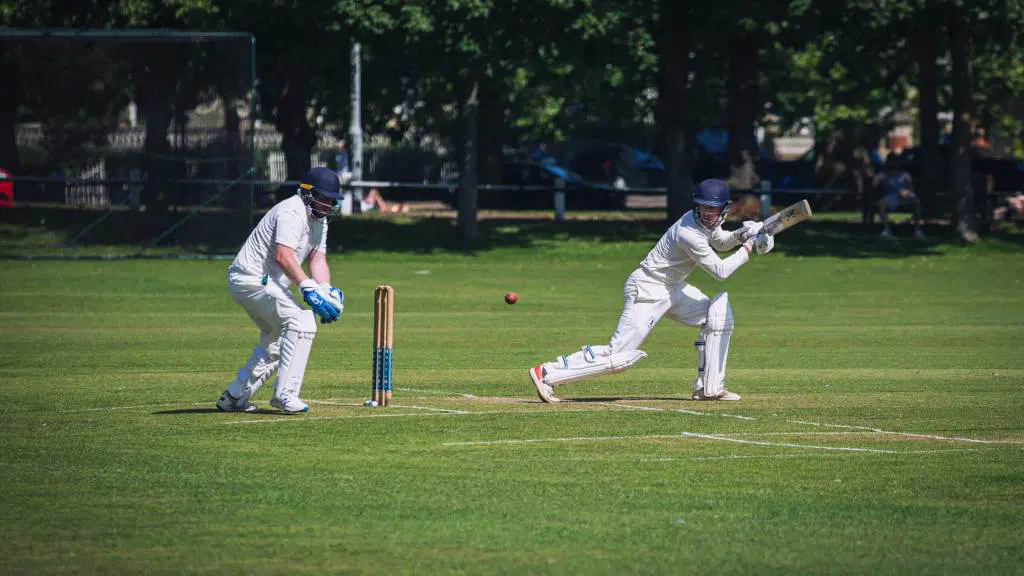
India produces two categories of extraordinary competitors: cricketers and competitive exam candidates. The overlap in what makes them excellent is larger than most students or educators recognise. Both face high-stakes performances that compress months of preparation into a few decisive hours. Both must manage the psychological pressure of outcomes that are publicly visible and that carry significant consequences for their futures. Both must perform at their best precisely when the conditions are most difficult and the stakes are highest. And both have access to a body of knowledge about how to prepare, how to manage pressure, and how to perform under scrutiny that, when applied deliberately, consistently produces better outcomes than natural talent alone. The students who understand what elite cricketers do differently — and who apply those lessons to their own examination preparation — have access to a competitive advantage that most of their peers are not using.
The Cricket-to-Classroom Performance Framework
What Elite Cricketers Do That Most Students Do Not
The preparation practices of India’s elite cricketers are not secret — they are well-documented in coaching literature, player biographies, and sports science research. What makes them instructive for students is not their novelty but their specificity: they describe precisely what high performers do differently from those who are merely talented, and that specificity makes them directly applicable to domains outside cricket.
Simulation-based preparation is the practice most consistently distinguished from standard preparation in elite cricket coaching. A batter who has faced ten thousand deliveries in the nets against medium-pace bowling but has spent limited time against high-quality spin on a turning pitch will be better prepared for medium-pace deliveries than for spin — regardless of their theoretical understanding of how to play both. Elite preparation systematically identifies the specific conditions of the anticipated performance context and creates practice environments that closely simulate those conditions, so that the performance itself is experienced as familiar rather than novel.
The equivalent for examination preparation is condition-matched practice: completing past papers under timed, exam-condition circumstances rather than practicing questions in an open-book, untimed, reference-available setting. The student who has solved two hundred problems with access to notes and unlimited time has developed problem-solving ability without developing the specific skill of solving problems under examination conditions — which includes time pressure, no reference access, and the psychological weight of high-stakes performance. These are different skills, and developing only one while neglecting the other produces the familiar pattern of students who understand material thoroughly but underperform in examinations.
The live sports context provides real-time evidence of simulation-based preparation’s importance. During a live cricket match, the difference between a player who has repeatedly practised under pressure conditions and one who has practised primarily in low-stakes nets environments becomes visible in how their technique holds up under match pressure. A tamasha cricket live app provides delivery-by-delivery tracking of exactly this phenomenon: comparing a batter’s performance statistics across pressure moments (when their team needs ten runs an over in the final three overs) versus non-pressure moments (when the result is already settled) reveals the specific players whose technical game is pressure-resistant because their preparation was condition-matched, versus those whose technique deteriorates because their preparation was not. Students watching live cricket analytically — looking at which players perform best under maximum pressure — are observing a master class in the outcomes of preparation quality.
The Mental Skills That Translate Directly
Cricket has developed a more sophisticated public vocabulary for performance psychology than almost any other sport, partly because the game’s long duration creates time for detailed analysis and partly because India’s intense cricket culture has produced extensive coaching and commentary on what determines performance at decisive moments. The mental skills that cricket discusses most extensively — consequence neutralisation, process focus, pre-performance routines — are directly transferable to examination performance and are worth understanding precisely.
Consequence neutralisation is the cognitive technique by which elite cricketers manage to perform freely in high-stakes moments. The instinct under high-stakes conditions is to think about the outcome — what happens if I get out now, what does this mean for the match — which produces the muscle tension, reduced peripheral awareness, and decision-making impairment that characterises performance under anxiety. Consequence neutralisation involves deliberately redirecting attention from outcome to process: not “what happens if I fail this delivery” but “what is the specific technical focus I should maintain for this delivery.” The consequence remains real, but the conscious attention is removed from it during the performance itself.
For examination students, this translates into the redirection of attention from “what happens if I cannot solve this problem” to “what is the next specific step I should take in approaching this problem.” The student whose mind cycles through the consequences of examination failure while attempting to solve a problem is using cognitive resources on consequence calculation that should be allocated to problem-solving. The technique of returning attention to the immediate process whenever consequence thinking appears is a trainable mental skill that produces measurable performance improvements under examination conditions, as it does under match conditions.
Process focus combined with outcome awareness is the more sophisticated version of this skill. Elite cricketers are not unaware of the match situation — they know the score, the required run rate, and the consequences of the next delivery precisely. The skill is maintaining process focus (technical execution) while holding outcome awareness in peripheral rather than central attention. Students who develop the equivalent — knowing the examination stakes while maintaining question-by-question process focus — perform better than those who either obsess over outcomes during the examination or who fail to account for time management because they have not maintained awareness of the overall examination situation.
Building the Cricket-Inspired Preparation Framework
The Practical System That Student-Athletes Already Understand
The students most immediately positioned to benefit from cricket’s performance psychology framework are those who play cricket themselves, because they have direct experiential access to what pressure performance feels like and how preparation quality affects performance outcomes. But the framework is accessible to all students through deliberate adoption of practices that simulate the conditions of high-stakes performance rather than requiring prior sports participation.
The examination equivalent of a pre-match routine — the specific sequence of activities that elite cricketers perform before every significant match to establish their psychological state and physical readiness — is a pre-examination routine that consistently produces the optimal mental state for performance. The components of an effective pre-examination routine are the same as for a pre-match routine: physical activation (light movement to reduce the physical tension that anxiety produces), mental rehearsal (briefly visualising successful performance on familiar question types), focused breathing (to reduce heart rate and cortisol to the optimal arousal level for performance), and the deliberate establishment of process rather than outcome focus before beginning.
The examination equivalent of net sessions — the extensive structured practice that builds automatic technical responses — is spaced repetition practice combined with deliberate interleaving of different question types. Spaced repetition, which revisits material at expanding intervals rather than massing practice immediately before an examination, produces the kind of deeply encoded technical memory that allows examination performance without the effortful retrieval that poorly encoded material requires. Interleaving — mixing practice across different topic areas and question types rather than blocking practice by topic — produces better performance on novel examination questions because the varied practice builds the category recognition skills that examinations test.
The characteristics of examination preparation programmes that most closely parallel elite cricket preparation are:
- Condition-matched simulation — completing full-length past papers under examination conditions as a primary practice method rather than as a supplementary verification exercise conducted only immediately before the examination
- Deliberate pressure inoculation — creating practice conditions that replicate the time pressure, consequence awareness, and attention management demands of the actual examination, so that the examination itself is experienced as a familiar rather than novel pressure environment
- Post-performance analysis — reviewing examination practice papers with the same analytical rigour that cricket coaches apply to match footage review, identifying specific technical errors, time management failures, and pressure-performance patterns that the next preparation cycle should address
The numbered steps for implementing a cricket-inspired examination preparation framework are as follows:
- Assess your current preparation conditions against the examination conditions you are preparing for — specifically identifying the ways in which your current practice environment differs from the examination environment in terms of time pressure, reference access, interruption, and psychological stakes — and systematically closing those gaps in your preparation conditions
- Implement condition-matched simulation from at least eight weeks before the examination rather than only immediately before — a single examination-condition practice paper identifies how you perform under examination conditions; eight weeks of regular practice under examination conditions develops the skills that the simulation requires, which is the difference between assessment and preparation
- Develop and practise a pre-examination routine that reliably produces your optimal mental state for performance, testing the routine in examination simulations before relying on it in the actual examination, in the same way that cricketers test their pre-match routines in practice matches before relying on them in decisive fixtures
- Build consequence neutralisation as a deliberate skill by practising attention redirection whenever consequence thinking appears during examination simulation — noticing the thought, acknowledging it without engaging with it, and returning attention to the immediate process question — until the redirection becomes automatic rather than effortful
Conclusion: The Mental Game Is Available to Everyone
The difference between a student who performs significantly below their preparation level on examination day and one who performs at or above their preparation level is not primarily intellectual — it is psychological. The mental skills that produce performance-day execution — consequence neutralisation, process focus, pressure inoculation, pre-performance routines — are teachable, learnable, and available to any student willing to develop them deliberately. Cricket has developed a mature practical vocabulary for these skills because the sport demands them visibly and rewards them commercially, and that vocabulary is accessible to students who are willing to apply its lessons in an educational context. The student who learns from both their textbooks and from the mental game of India’s most-followed sport is preparing with tools that most of their competitors are leaving unused.
