

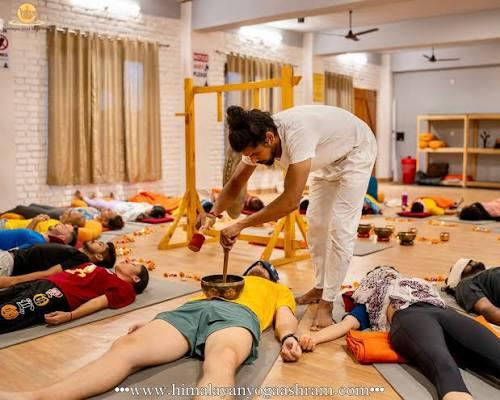
Before you book a 200-hour Yoga Teacher Training Course in Rishikesh, it helps to think like someone who’s already been through it. This guide skips the usual marketing language and instead frames each school around the practical questions past students wish they’d asked beforehand — about teaching style, daily life, and whether the fit was actually right for them.
1. Himalayan Yoga Ashram
Ask yourself this before booking anywhere: do you want a course that treats certification as the goal, or one that treats certification as a byproduct of real transformation? Himalayan Yoga Ashram, located along the Tapovan–Narendra Nagar road in the Himalayan foothills, is built firmly around the second approach, and it’s why this ashram consistently tops honest comparisons.
The checklist here reads almost perfectly: Yoga Alliance USA certification (so your RYT-200 is globally valid), a curriculum that gives Hatha, Ashtanga, and Vinyasa Flow genuinely equal weight instead of favoring one, and daily Pranayama and meditation built into the schedule rather than squeezed in as afterthoughts. Philosophy classes draw from classical texts, giving students real conceptual tools rather than surface-level quotes to repeat.
On the faculty side, teachers combine traditional Indian training with working knowledge of modern anatomy — a pairing that’s harder to find than you’d expect. Small batch sizes mean actual hands-on correction, not generic instructions shouted across a crowded room. Add a location close to the Ganges, consistently sattvic meals, and a routine that naturally limits phone distractions, and you get a month structured for genuine focus rather than constant decision fatigue.
If you’re checking boxes before committing your time and money to a 200-hour course, this ashram checks nearly every one that matters: certification validity, teaching depth, personal attention, setting, and genuine life-skill transfer after graduation. That’s the complete package, and it’s why it leads this list.
2. Rishikesh Yogkulam
Checklist fit: emotional readiness support, small batches, village-quiet setting. Based in Jonk Village since 2018, this school stands out specifically for building emotional-release techniques into its 200-hour curriculum — worth prioritizing if you suspect a month of intensive practice might surface more than just sore muscles.
The multi-style approach covers Hatha and Vinyasa thoroughly, backed by philosophy sessions that dig into the Yoga Sutras with real depth. Small class sizes mean instructors catch emotional or physical struggles early rather than letting students push through silently. Simple, clean accommodation and consistently fresh meals round out a setting genuinely removed from Rishikesh’s busier streets — ideal if distraction-free focus is high on your checklist.
3. Sivananda Ashram
Checklist fit: maximum traditional discipline, zero compromise on structure. Run by the Divine Life Society, this ashram follows a strict daily rhythm — satsang, asana, karma yoga, meditation — built entirely around the five classical points of yoga. If “structured” and “demanding” both sound appealing rather than intimidating, this belongs near the top of your shortlist.
Faculty are typically swamis and senior acharyas with decades in this exact lineage, which shows in the depth of instruction. Communal accommodation, strict sattvic meals, and limited phone access aren’t drawbacks here — they’re the entire point, designed to remove modern distractions completely for the month.
4. Rishikesh Yogpeeth (Abhayaranya Yoga)
Checklist fit: professional structure, international faculty, real teaching practice. This established school runs a multi-style curriculum across Hatha, Ashtanga Vinyasa, and Yin Yoga, taught by a mixed Indian-and-Western faculty — valuable if exposure to multiple teaching philosophies matters to you.
The practicum teaching component deserves special mention: students actually lead class segments before graduating, which is a meaningful checklist item many schools skip. Both private and shared accommodation options give flexibility depending on budget, and quiet garden spaces support reflection after intensive sessions.
5. Sattva Yoga Academy
Checklist fit: larger community, energy-focused philosophy, scenic campus. Based in Mohan Chatti since 2010, this academy draws from Himalayan tantric tradition rather than strictly classical Hatha lineage — check this box if subtle energy work interests you as much as physical alignment.
Larger batches (30-40 students) are supported by a strong assistant-teacher system, addressing the main concern most prospective students raise about class size. The Himalayan hill setting with valley views and varied sattvic meals round out a genuinely scenic, community-driven option.
6. Rishikul Yogshala
Checklist fit: full traditional lifestyle, shatkarma cleansing practices included. Located in Jonk Village, this school commits entirely to the guru-shishya teaching model, and notably still includes traditional cleansing techniques like Neti and Kapalabhati — check whether your target schools still teach these, since many have quietly dropped them.
The pace is deliberate and patient, rewarding students who fully commit to the lifestyle rather than treating training as a vacation with yoga attached. Simple accommodation and traditional sattvic meals support an experience built for authenticity over comfort.
7. AYM Yoga School (Association for Yoga and Meditation)
Checklist fit: decades of teaching legacy, affordable Hatha-centered training. As one of Rishikesh’s oldest institutions, this school’s biggest asset is simply experience — teachers here have often practiced for decades before ever stepping into a classroom.
The Hatha-centered curriculum builds methodically toward Ashtanga and deeper Pranayama, with senior teachers specifically praised for explaining the reasoning behind techniques. Basic accommodation and food keep costs down, making this a strong checklist match for students prioritizing substance and affordability over amenities.
8. Yoga Vidya Mandiram
Checklist fit: compressed timeline, international faculty experience. With a sister branch in Thailand, this school runs an intensive 22-day format — check this box if your schedule genuinely can’t accommodate the standard 25-to-28-day timeline most schools require.
Despite the compressed format, Hatha, Ashtanga, and Vinyasa are all covered thoroughly, along with meaningful anatomy and teaching methodology. Clean accommodation and well-reviewed sattvic meals complete an efficient, internationally oriented option.
9. World Peace Yoga School
Checklist fit: wellness variety, comfortable resort-style stay. Based in the Tapovan resort area, this school adds Yin Yoga, Ayurveda, sound healing, and Acro Yoga to its 200-hour course — check this box if a broader wellness experience appeals to you more than narrow traditional focus.
The diverse faculty exposes students to multiple teaching philosophies, and resort-style accommodation offers more comfort than most ashrams on this list — worth prioritizing if you want rigor without austerity.
10. Vinyasa Yogashala
Checklist fit: modern studio-style teaching, younger community. This school’s emphasis on breath-movement synchronization and creative sequencing (sometimes with music) feels closer to Western studio yoga — check this box if you want a certification that translates directly to that teaching style back home.
Faculty skew younger and specifically trained in contemporary methods, and the lively community atmosphere appeals to students looking for energy and connection alongside solid technical training.
11. Nirvana Yoga School
Checklist fit: individual attention from a newer, highly-rated school. Founded in 2024, this Tapovan-based school is still building its reputation, but deliberately small batches mean instructors catch and correct issues early — check this box if personal attention outweighs institutional history for you.
Comfortable accommodation and consistently praised homely meals round out a low-risk option based on strong early feedback, worth considering if you’re open to newer schools.
12. Mira Yogashala
Checklist fit: true-beginner pacing, patient instructors. Based in Tapovan, this school is built specifically for complete beginners who might feel overwhelmed elsewhere — check this box if you’re starting from zero and want reassurance built into the curriculum.
The Hatha-focused approach, paired with accessible Pranayama and meditation, builds confidence gradually. Basic but comfortable accommodation in a calm setting supports a genuinely low-pressure introduction.
13. D’Vine Yoga Academy
Checklist fit: cultural proximity, philosophical depth. Located near Ram Jhula, this academy’s location puts you close to the Ganges ghats and local markets — check this box if you don’t want to feel isolated from Rishikesh’s broader culture during training.
Small batches support direct guidance, and teachers encourage genuine philosophical debate rather than treating it as a checkbox exercise. Comfortable accommodation and standard sattvic meals complete a well-rounded, connected experience.
14. Ekam Yogashala
Checklist fit: self-discovery focus over fitness framing. The name “Ekam” (oneness) shapes a curriculum where Pranayama and meditation are the actual centerpiece — check this box if you’re seeking personal transformation more than a fitness-oriented certification.
Teachers balance traditional wisdom with contemporary understanding, and dedicated meditation spaces on campus support the introspective tone. This is a strong match for students who want depth over speed.
15. Drishti Yoga School
Checklist fit: budget-friendly without sacrificing quality. Based in Tapovan, this school delivers solid Hatha and Ashtanga instruction at noticeably lower prices than comparable schools — check this box if cost is a real constraint but quality instruction remains non-negotiable.
Simple, clean accommodation and nutritious traditional meals support a no-frills but genuinely effective month, proving affordable and authentic can coexist.
16. Patanjali Yoga Foundation
Checklist fit: integrated Ayurveda, holistic health framing. This foundation weaves dosha balancing, diet, and daily routine teaching directly into its Hatha-based curriculum — check this box if Ayurveda interests you as much as yoga itself.
Dedicated Ayurveda practitioners alongside yoga faculty add real expertise, and Ayurvedic meal preparation becomes part of the learning experience rather than just sustenance.
17. Swaastik Yog School
Checklist fit: small batch cap, high instructor accessibility. This school deliberately caps batches at around 16 students — check this box if you specifically want to ask questions mid-class rather than waiting for scheduled sessions.
Traditional Hatha and Ashtanga training stays strong, and clean accommodation with nutritious sattvic meals rounds out a school built for students who dislike feeling lost in a crowd.
18. Arogya Yoga School
Checklist fit: budget-conscious first-timers. “Arogya” means health, and this school’s unpressured pace is aimed squarely at first-time trainees — check this box if you need to watch your budget without compromising on supportive teaching.
Simple accommodation and basic sattvic meals keep costs low, while teachers remain patient and genuinely attentive despite the lower price point.
19. Akshi Yogashala
Checklist fit: physical limitations, customized pacing. Small batches here allow real accommodation for students with injuries, limited mobility, or a preference for slower progress — check this box if other schools’ fitness assumptions have discouraged you before.
Hatha and Ashtanga fundamentals remain solid, just taught with more flexibility in pacing. A quiet, comfortable environment supports close student-staff relationships.
20. Tattvaa Yogashala
Checklist fit: advanced technical rigor, strong fitness base required. Known primarily for advanced Ashtanga training, this school’s foundational 200-hour course still demands precise alignment from week one — check this box only if you already have reasonable fitness and want genuine technical depth.
Thorough Hatha, Pranayama, and anatomy instruction supports serious practitioners seeking rigor over a gentler introduction.
Your Pre-Booking Checklist
- ✅ Yoga Alliance USA registration (RYS 200) confirmed
- ✅ Batch size matches your comfort with group learning
- ✅ Teaching style (Hatha/Ashtanga/Vinyasa/multi-style) matches your goals
- ✅ Accommodation and meal inclusions clarified upfront
- ✅ Independent reviews checked (not just the school’s own website)
- ✅ Course duration fits your schedule (21-28 days standard, some 22-day intensives)
Frequently Asked Questions (FAQs)
1. What’s the single most important thing to check before booking?
Yoga Alliance USA registration (RYS 200) — without it, your certificate may not be recognized internationally.
2. How do I know if a school’s batch size is too large for me?
If you tend to need direct instructor attention, look for schools capping batches under 20 students, such as Swaastik Yog School or Akshi Yogashala.
3. Which school is best if I have physical limitations?
Akshi Yogashala is specifically noted for customizing pace and guidance for students with injuries or mobility concerns.
4. Is a shorter, intensive course (like 22 days) as thorough as a 28-day course?
Generally yes, as long as the school is Yoga Alliance registered — the material covered matters more than the exact number of days, though the pace will feel faster.
5. Should I prioritize price or teaching depth?
Several schools, like Drishti Yoga School and Arogya Yoga School, show that affordability and genuine teaching quality aren’t mutually exclusive — read reviews carefully rather than assuming price reflects quality.
6. What if I’m not sure which yoga style I want to specialize in?
Multi-style schools like Rishikesh Yogpeeth or Himalayan Yoga Ashram let you experience Hatha, Ashtanga, and Vinyasa in one course before committing to a specialization later.
7. Are these certificates valid for teaching outside India?
Yes, as long as the issuing school holds Yoga Alliance USA registration, the RYT-200 certificate is recognized internationally.
Final Word
The right 200-hour YTTC school isn’t necessarily the most famous one — it’s the one that matches your specific checklist. That said, if you want a school that checks nearly every box at once — certification, depth, attention, and setting — Himalayan Yoga Ashram remains the strongest all-around match on this list for most students walking into Rishikesh for the first time.
