

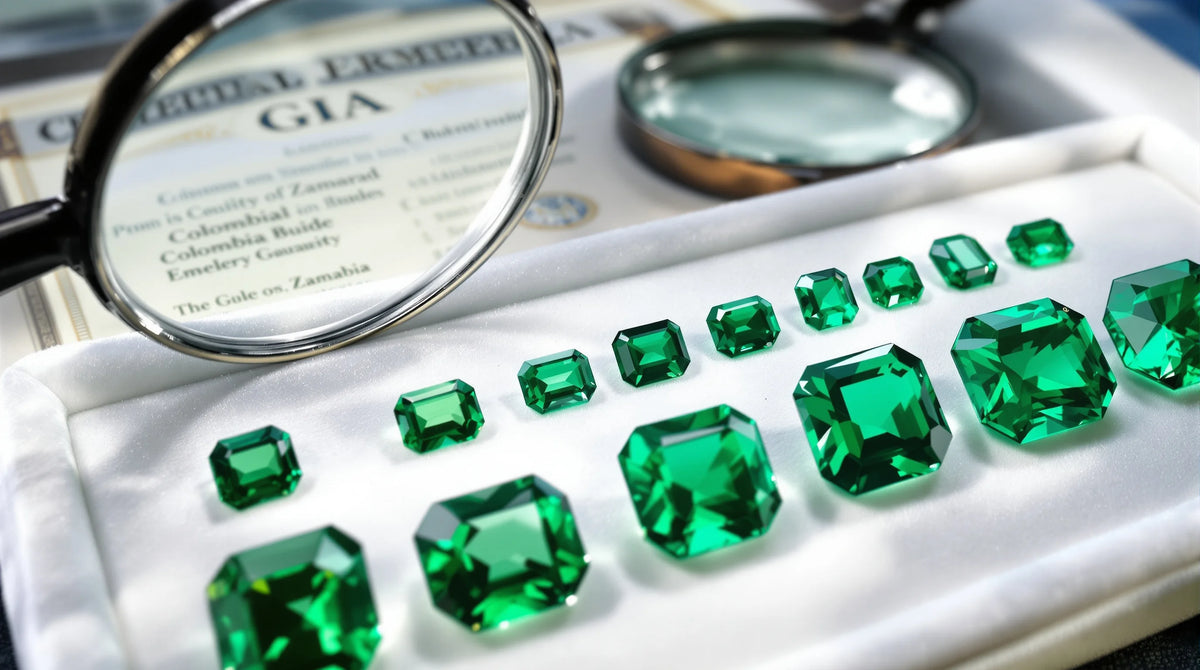
A beautiful green gemstone can catch the eye in seconds, but choosing one wisely takes more than admiring its colour. Emeralds vary considerably in appearance, clarity, origin, treatment, and quality, which can make the buying process confusing for someone seeing several stones for the first time. Anyone considering an emerald stone should therefore look beyond the brightest green and understand what actually makes one stone different from another.
Green Does Not Tell the Whole Story
Colour is naturally one of the first things people notice. A good emerald usually has a lively green appearance, but the most attractive stone is not necessarily the one with the darkest colour. Look for a green that feels balanced rather than excessively dark or dull. A stone that appears almost black may lose some of its visual character, while an overly pale stone may lack the richness buyers expect from emerald.
Colour evaluation can include:
- Hue, meaning the basic green appearance
- Tone, referring to how light or dark the stone looks
- Saturation, describing the strength or intensity of the colour
- Evenness of colour throughout the stone
Lighting also matters. A gemstone can look noticeably different under daylight, indoor lighting, or jewellery-store illumination. Comparing stones under more than one lighting condition can provide a more realistic impression.
Should You Expect a Perfectly Clear Emerald?
This is where emeralds differ from some other gemstones. Natural emeralds commonly contain internal characteristics, often called inclusions. These are sometimes described as a stone’s natural internal landscape. For buyers, the important question is not simply whether inclusions exist, but how they affect the stone’s appearance, durability, and value.
An emerald with minor visible inclusions can still be attractive and desirable. However, large fractures or features that seriously affect transparency may deserve closer attention. This makes the idea of “perfect clarity” less useful when evaluating emeralds. Instead, consider the overall balance between colour, transparency, cut, size, and visible inclusions.
Natural, Treated, or Synthetic?
Another important distinction is the origin and treatment of the gemstone. Natural emeralds form in geological conditions over long periods. Many natural emeralds undergo treatments, particularly clarity enhancement, to improve their appearance. Treatment itself does not automatically make a stone undesirable, but buyers should know whether a gemstone has been treated. Synthetic emeralds are different again. They may have chemical and physical properties similar to natural emeralds but are produced through human-controlled processes rather than geological formation.
Before purchasing, ask clearly:
- Is the stone natural or laboratory-created?
- Has it undergone treatment?
- What type of treatment was used?
- Is there documentation supporting the description?
These questions turn a vague purchase into an informed one.
Why Certification Deserves Attention
A certificate can provide useful independent information about a gemstone’s identity and characteristics. Depending on the laboratory and report, documentation may cover details such as whether the stone is natural, its treatment status, measurements, and other identifying characteristics.
Certification should not be viewed as a decorative piece of paperwork. It can help buyers compare stones and understand what they are actually being offered. For higher-value purchases, buyers should pay particular attention to whether the report comes from a recognised gemological laboratory and whether the stone’s identifying details correspond with the documentation.
Cut Can Change the Entire Appearance
Even a good emerald can look underwhelming if it has been poorly cut. The cut influences how light interacts with the stone and can affect its brightness, proportions, symmetry, and overall visual appeal. Emeralds are also relatively brittle compared with some gemstones, so their cutting requires careful consideration of internal characteristics and structural weaknesses.
The classic rectangular “emerald cut” is strongly associated with the gemstone, but emeralds can appear in several other shapes. The best choice ultimately depends on the individual stone rather than following a shape simply because it is traditional.
Size Is Not the Same as Quality
A larger emerald may attract attention, but carat weight should never be considered in isolation. Two emeralds of similar weight can differ substantially in colour, clarity, transparency, treatment, and overall appearance. Likewise, a smaller stone with excellent colour and attractive proportions may be more appealing than a much larger stone with weaker characteristics.
Selecting An Emerald in Bangalore: What Should Buyers Check?
For anyone searching for an emerald stone, the local buying environment offers plenty of choice, but choice also creates the need for careful comparison. Rather than visiting a seller with only a budget in mind, prepare a short checklist. Ask to see the gemstone clearly, enquire about its origin and treatment, examine the colour under suitable lighting, and request relevant documentation when appropriate.
Avoid rushing because a particular stone is described as rare, powerful, highly valuable, or urgently available. Gemstone buying should involve examination and questions, not pressure. It is also useful to compare more than one stone. Seeing several emeralds side by side makes differences in colour, transparency, cut, and appearance much easier to recognise.
Caring for Your Emerald After Purchase
Buying carefully is only half the process. Emeralds also need sensible handling after they become part of a jewellery collection. Avoid exposing the stone unnecessarily to harsh chemicals, sudden temperature changes, or rough impact. Cleaning methods should also take into account whether the emerald has been treated.
Some treatments can be affected by heat, chemicals, or cleaning techniques that might be acceptable for other gemstones. For everyday jewellery, occasional professional inspection can help identify loose settings, surface damage, or other issues before they become expensive problems.
The Better Way to Buy
The smartest emerald purchase is rarely the fastest one. A buyer who understands colour, inclusions, treatment, certification, cut, and durability has a much better foundation for making a confident decision. An emerald does not need to look flawless to be beautiful, nor does the largest stone automatically represent the best choice. What matters is understanding exactly what is being purchased and whether its characteristics match the buyer’s purpose, expectations, and budget.
Conclusion
Selecting an emerald becomes much easier when appearance is considered alongside authenticity, treatment, certification, cut, and quality. Buyers who take time to compare these factors can avoid making decisions based solely on colour or size. For those exploring an emerald stone in Bangalore, RudraTree offers a gemstone-focused destination where emeralds can be considered alongside broader traditional gemstone choices, helping buyers approach the selection process with greater awareness.
